My Airbnb host in Baku had told me, “If you see one more place in Azerbaijan than Baku, then make it Shekhi”. And though I had my plans to feel the different characters of Azerbaijan, and take a longish tour, his words had got me excited for Shekhi. Shekhi was my last stop in Azerbaijan, and a two-day halt before entering Georgia via a land border. As my host had told me, Sheki combines history, culture, and nature in a way few towns do. And I am a simp for cultural things – and probably Shekhi was absolutely the thing I was looking for as the parting memory of Azerbaijan. And one thing I had got certain about was that Shekhi would make me step back into olden time, when tourists halted at Caravansarai in Shekhi, before heading onwards on the Silk Route.
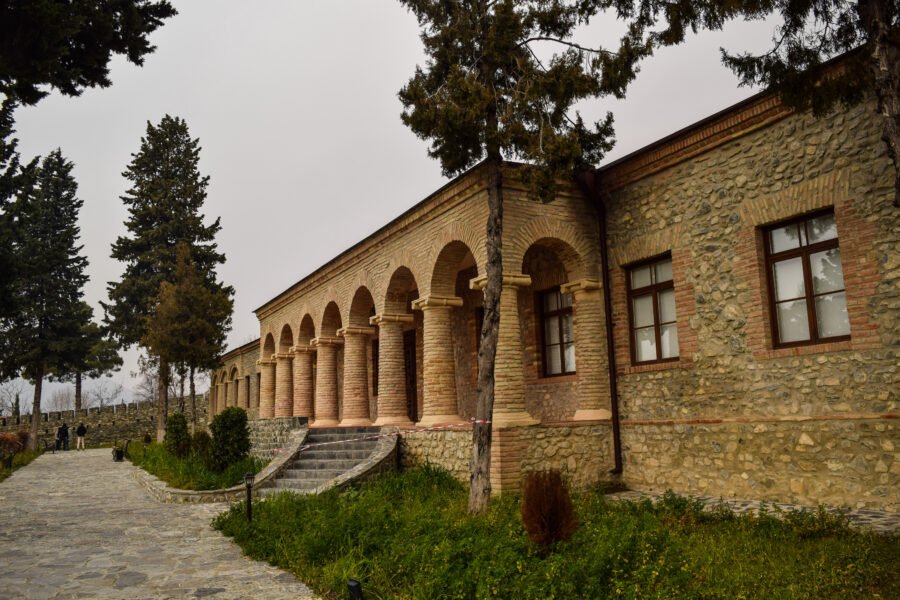
First impressions of Sheki
The overnight bus from Baku spat me out into Sheki’s bus station in the dead of a winter’s night. In that cold night, with the town swathed in darkness, I had no other choice than to huddle for a couple of hours in the bus station. But somehow, I wasn’t alone for long.
The locals looked at this tired stranger and instantly broke into short conversations about my whereabouts. Soon a local passed a steaming glass of çay into my numb hands. In that frozen, deserted terminal, I was getting the most authentic taste of Azeri hospitality. There were no formalities, no awkward icebreakers – just immediate inclusion. A moment later they involved me in their daily routine and chats over a cup of tea. They shared their contact number and turned into local help with “You need anything you give me a call, okay”. That was heart-warming. I learnt one thing about Azeri hospitality, it’s that there’s no such thing as a stranger when there’s tea to be shared.
Sheki: The historical town
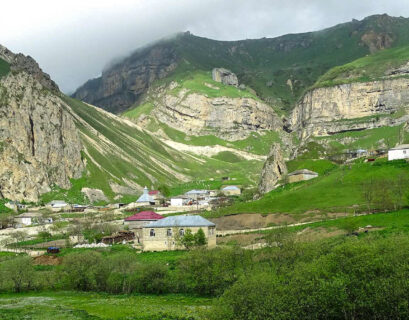
Backlit by the Caucasus mountains and a river running through the city, Shekhi appears a typical mountain city. Around 8th century BC, the Khans founded Shekhi. Later, it served as the capital for the powerful Shekhi Khanate who gifted the city with some of its finest architecture, including the famous Khan’s Palace. Shekhi was an important stop in the Silk Route. You can still see this legacy in the monumental stone caravanserais that once housed traders and travelers along the Silk Road. In 2019, UNESCO inscribed the Historic Center of Shekhi. In its heydays Shekhi was a major centre for silk production and silkworm cultivation. It became known for its skilled artisans and trading of silk and silk fabrics, in particularly silk headscarves.
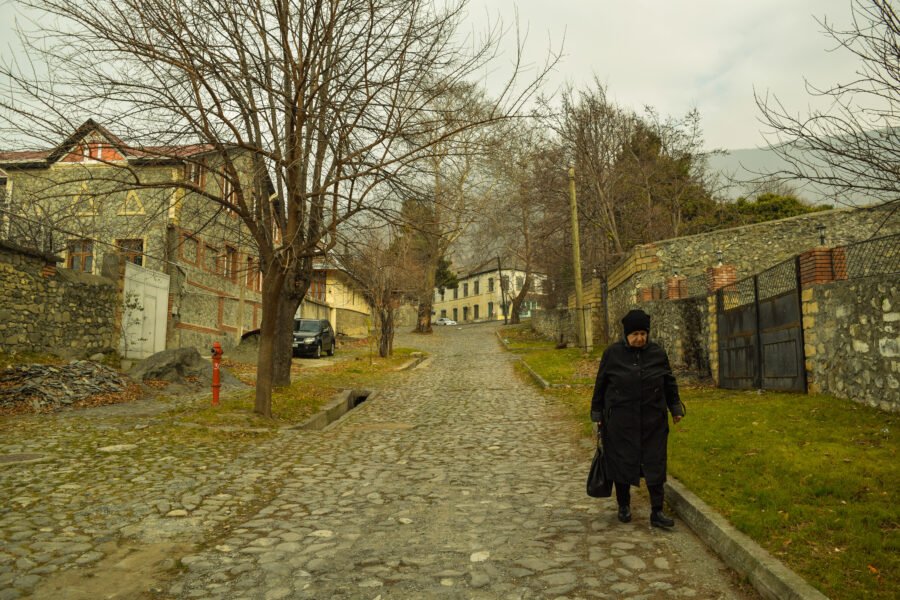
Shekhi also has remnants of the Soviet history. You can still find the Soviet-era architecture, monuments and retro cars (the Lada lives on in Sheki!) here.
Get floored by the impressive Sheki Khan Palace
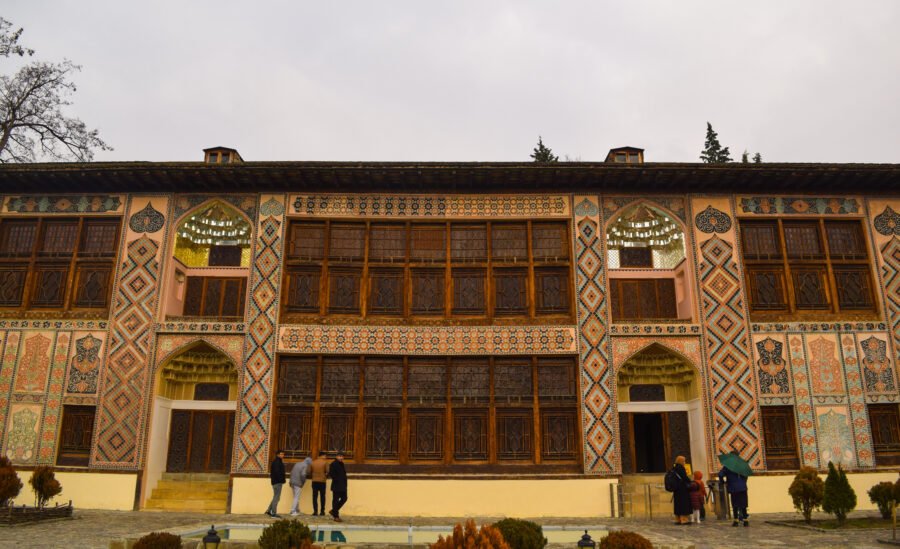
Shekhi Palace is among the major stops in Shekhi, and among the most beautiful buildings in Caucasus. This is a 250-year-old building in all its glamour. The interesting part of the architecture of the Shekhi Palace is that it does not contain a single nail. The design and structure of the Khan’s Palace that combines red brick with red cobblestone – looks resplendent – and stands as an emblem of the wealth generated through silkworm trade in that era.
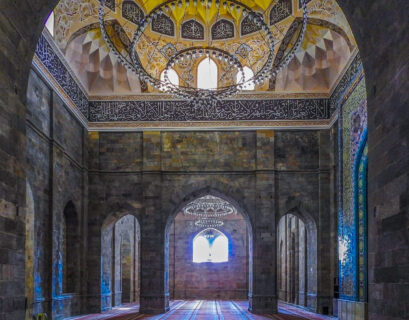
The Khan’s Palace was built over a decade-long period ending in 1797. The builders spent eight out of the 10 years taken to complete the palace, on the interior. The result is an extraordinary display of craftsmanship. Almost every one of the six reception rooms, offices and living quarters is lavishly decorated from floor to ceiling with intricate miniature paintings (including thousands of human characters, each with a unique face), wood inlay ceilings and Qajari-style mirrored niches. And then there are coloured window glasses made with paper-thin Venetian glass.
The building process used no nails in the construction of these glasses. This special technique to slot thousands of glass pieces into their wooden frame is called Shebeke. You can also go to the Shebeke workshop on the grounds of the castle and see this artform for yourself.
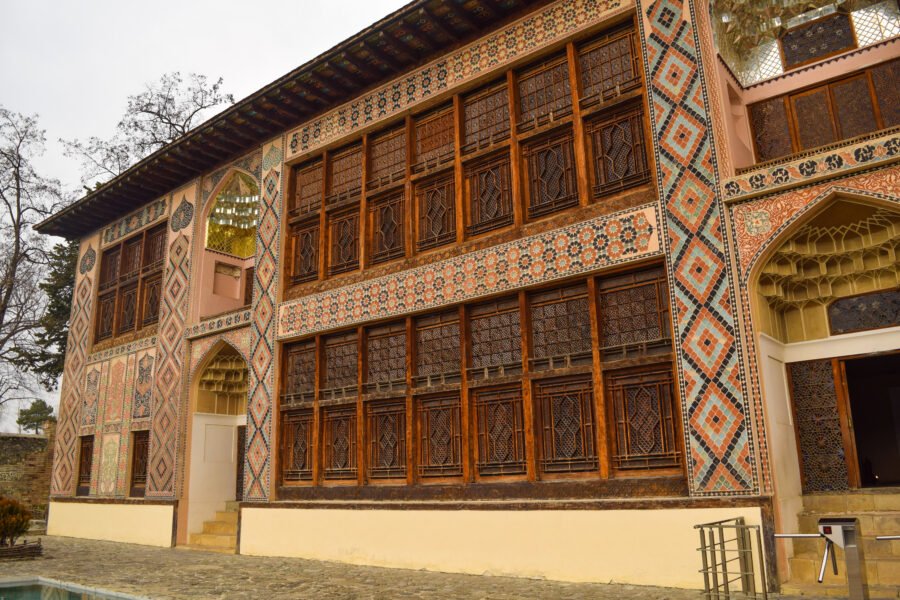
If you visit the palace late in the evening – chances are that you can see the light streaming through the Shebeke windows at just the right angle, painting a colourful mosaic on the wooden floors.
Explore the Sheki Palace complex
The complex has a host of other buildings too – among those is a silkworm farm and museum.
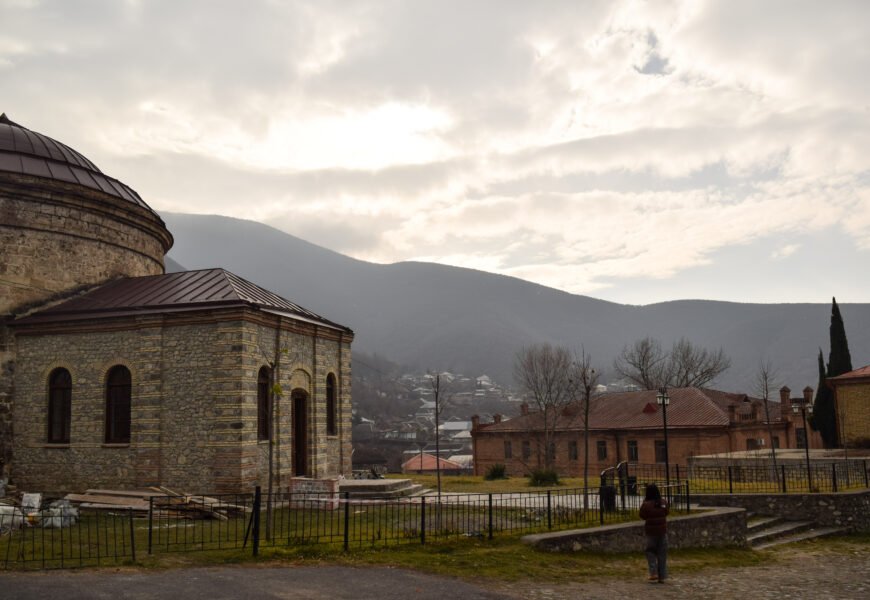
There is also an Albanian Church in the same compound. History a little ambiguous of the building, and accounts range from it being Caucasian Albanian Church, a former Mosque and/or a chapel for the Imperial Russian garrison. Today, it seems to stand more as a reminder of cultural amalgamation this town has seen.
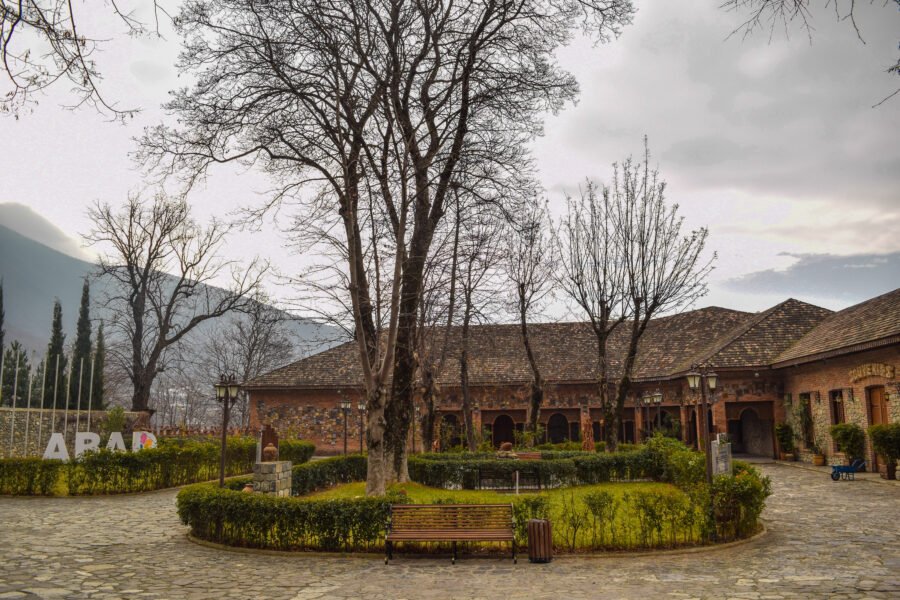
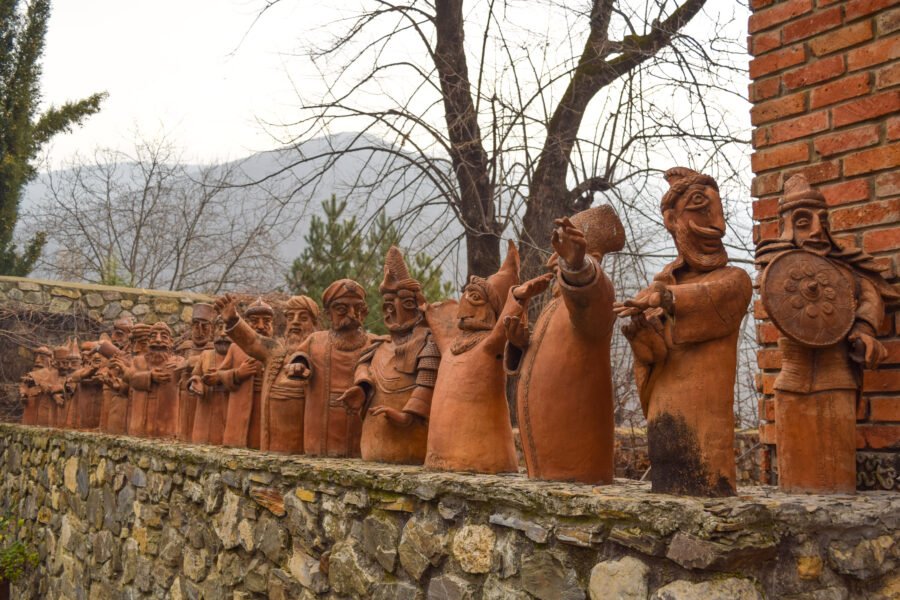
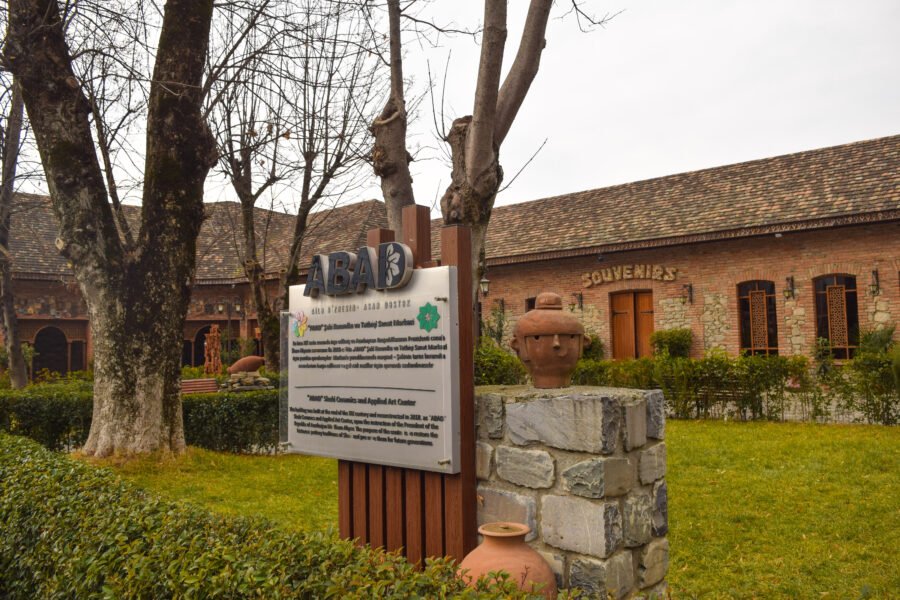
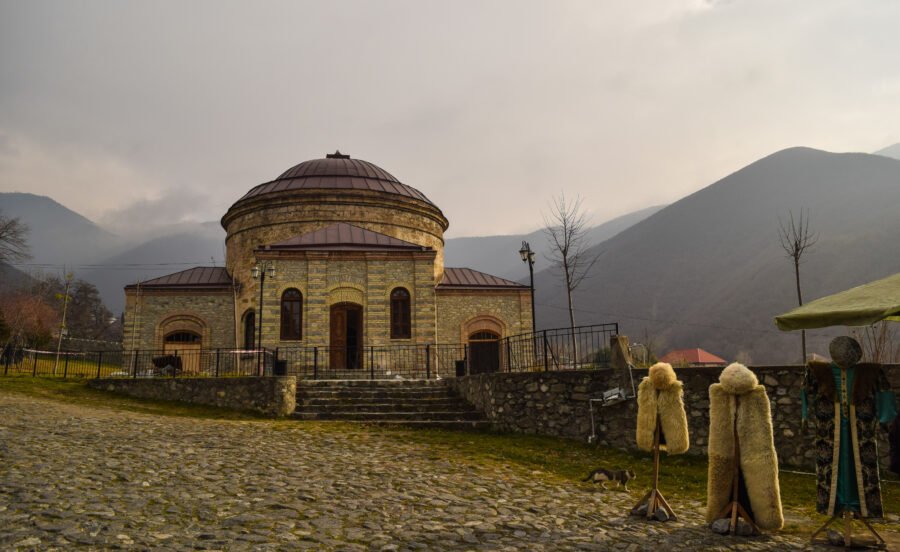
You will only find few of the original castle structures. Most of the buildings are 19th century Russian Military Barracks.
Live the old-world hospitality in the Caravansarai
The caravanserais of Sheki once provided weary travellers with a place to rest overnight. They also served as bustling centres of trade, exchange and negotiation for merchants journeying along the Silk Roads. There are two main historic Caravanserai in Shekhi – Upper and Lower Caravansarai. These are said to be constructed in the 18thcentury.
The Upper Caravanserai, the larger of the two, contains more than 300 rooms and storerooms, reflecting the scale and importance of Sheki as a trading center. And there is good news for travelers today. The town authorities have beauctifully restored and converted part of the Upper Caravanserai into hotel accommodation (where you need to call and book a room like old days). A stay here offers a chance to experience the life a trader would have passing through Sheki centuries ago.
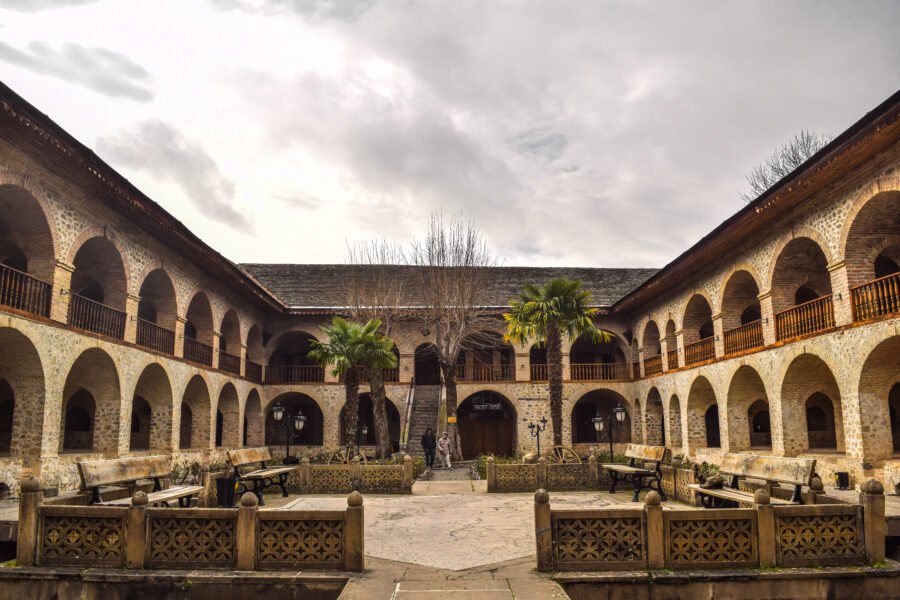
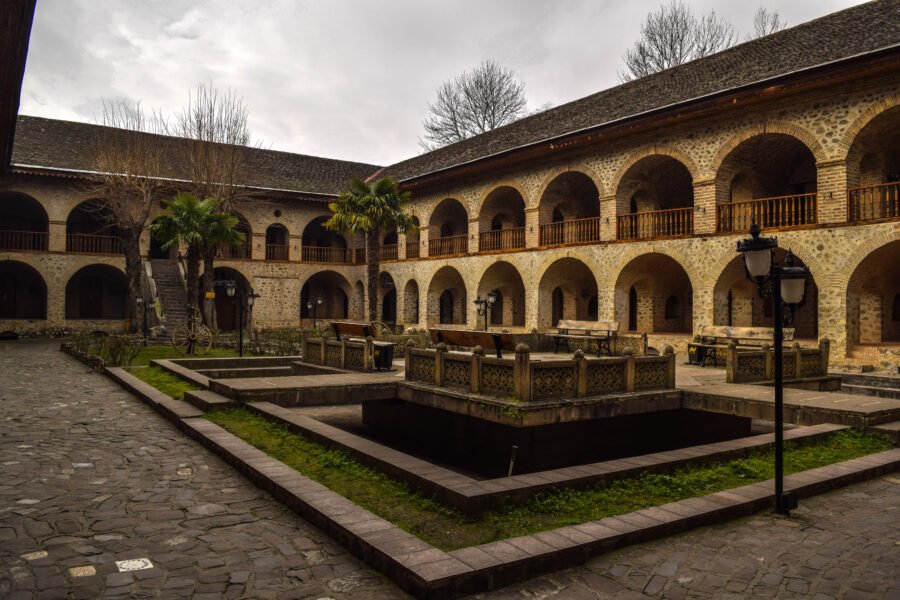
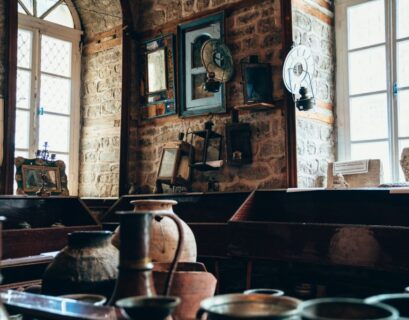
The bottom level of the caravanserai acts as an open-door shopping complex. Shekhi artisans crafted exquisite pottery, leather and woodwork, and produced fine silk and woven fabrics. The shops lined up on the road next to Caravansarai – brings these exquisite pieces for travellers.
The charm of Shekikhanovs’ House
The Shekikhanovs’ House (also called Shekikhanovs’ Palace or Winter Palace) stands a few blocks away from the Caravansaries. There is a bit of debate about the purpose of this palace. As per some reports, this complex served as a Winter Palace for Shekhi Khans. The building, however, mentions that this was a residential complex of relatives of Shekhi Khan. The house is less ornate than the main palace, but it does have nice Shebeke stained glass and a painted eave. Like the main palace, this house was also empty – and quite bare. Only one of the rooms was elaborately decorated with frescoes of deer, lions, pheasants and people in traditional costumes.
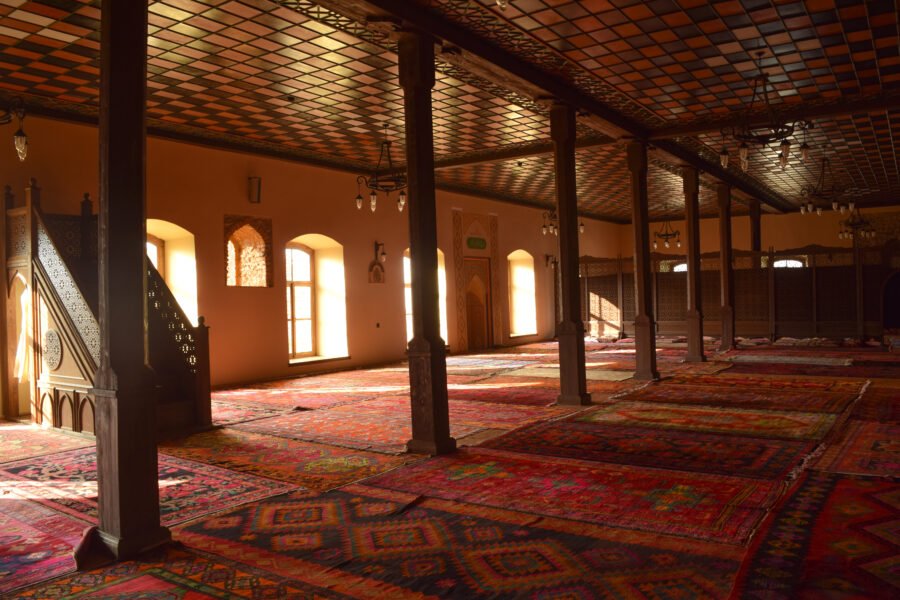
The interesting character of the Old town
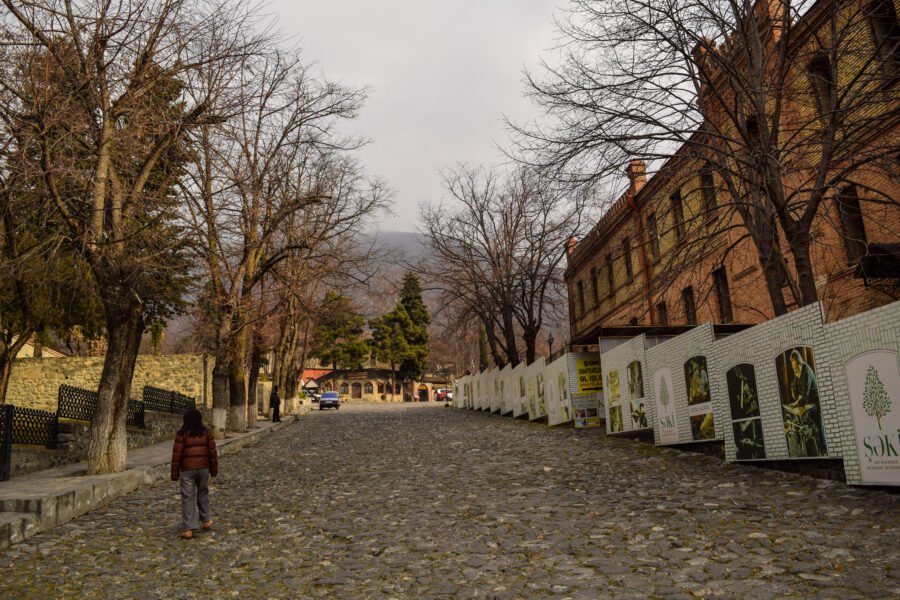
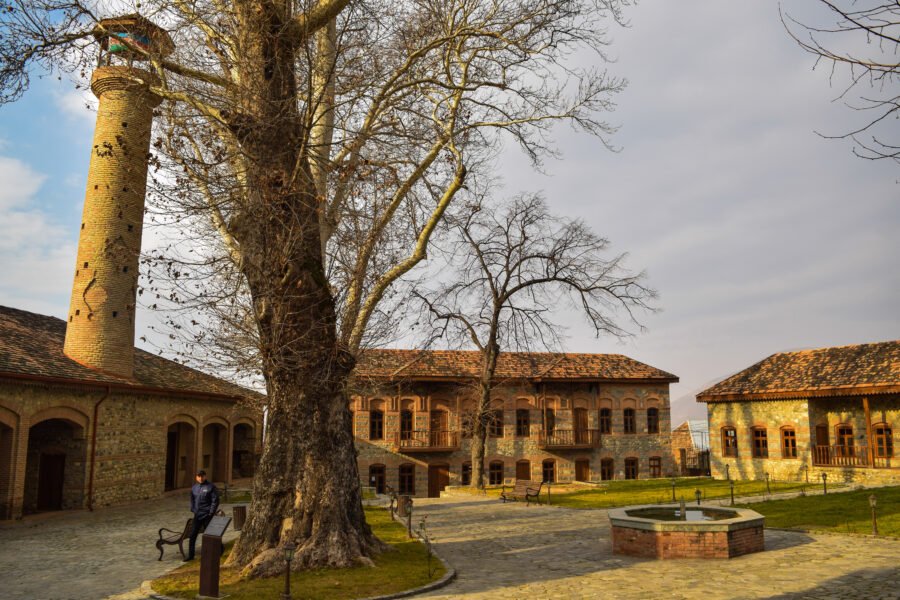
This perhaps is the most lively and interesting activity in Shekhi. You need to loose up a bit, and walk around the old town through those cobbled streets. The charm of Shekhi with its old buildings constructed with a combination of brick and stone, lined up on both sides, will grow on you. The interesting part is that this Old Town is not that old. In the 18th century a large mudslide devastated Sheki, and they rebuilt the city. Thus, much of this extensive history that makes the old city today is primarily 18th-20th century architecture.
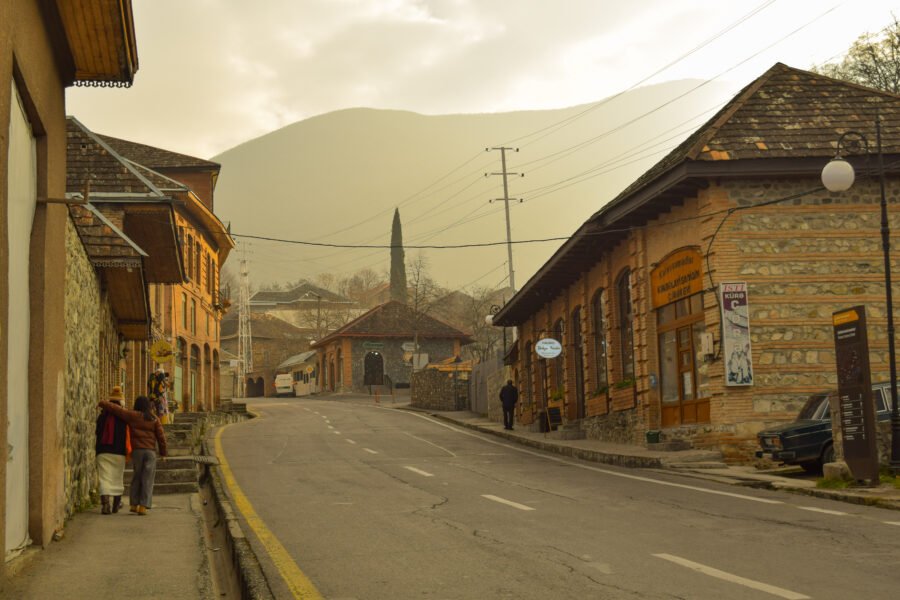
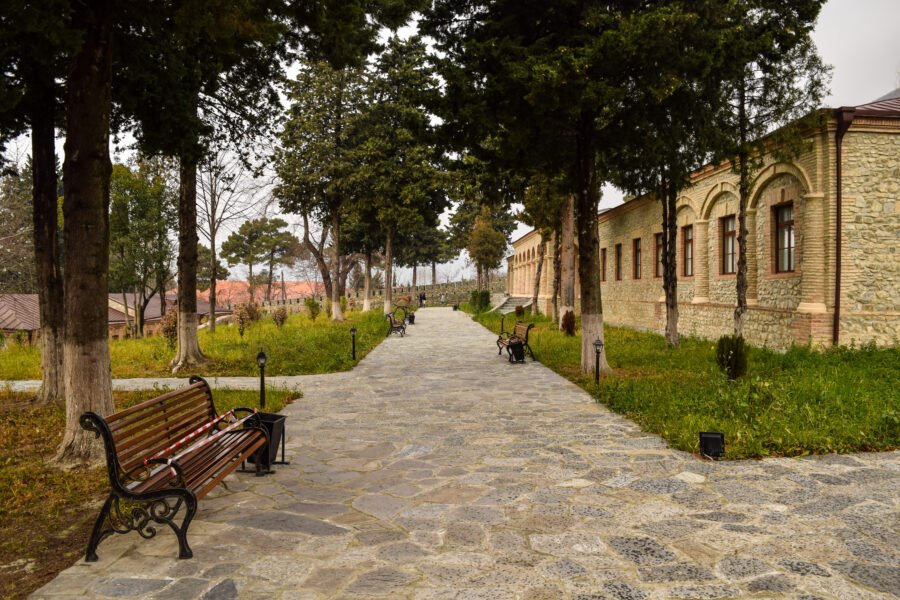
In the old city, you will find the Muhammad Huseyn Khan Complex built in 1700s. Close to is a closed Silk factory, a relic of Soviet times. And a number of cafes serving authentic Shekhi food. After a long day exploring this old city, I went to the iconic Central Hostel for a coffee. As I sipped coffee and broke into conversations with some other travellers, I realized Shekhi is one of those rare places where even if you wander aimlessly, you will find some meaning. There is an almost ethereal beauty to the city—a place guarded by the Caucasus, with a mountain river running through its heart, while layers of history, destruction and rebirth linger around every corner. Perhaps that is Shekhi’s greatest charm: you do not need an itinerary to discover it; you simply need to wander, and let the city reveal itself.
Hits: 53
Tags: Azerbaijan tourism, Azerbaijan travel, Cultural travel in Azerbaijan, Hidden Gems of Azerbaijan, offbeat Azerbaijan, Places to see in Azerbaijan, Shekhi, Shekhi in Azerbaijan, Shekhi old town, Shekhi town Last modified: September 23, 2026