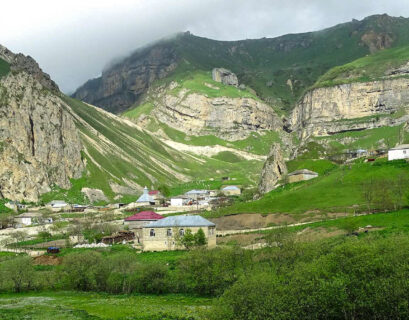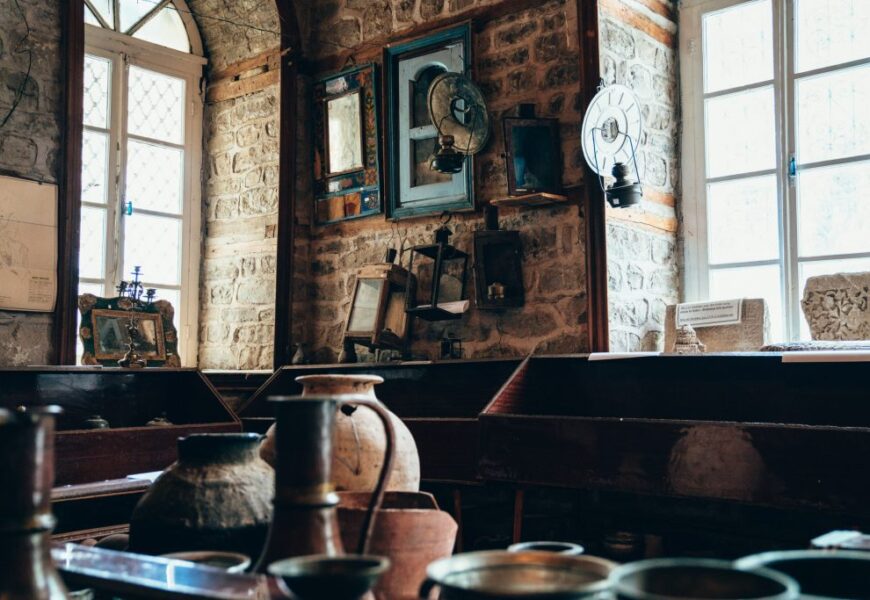
Some places are simply meant to stay with you. Lahij is one of them. Long after I left, Lahij’s timeless charm, and unparallel craftsmanship on display in artisan workshops continue to linger in my mind. Now that I have experienced Lahij, I would urge my readers to spend an entire day here rather than just a few hours, as I did. And as Lahij is located barely 50 kilometres from Shamakhi, it is an easy excursion into another era. Lahij deserves to be given ample amount of time spent wandering through its narrow streets, peeking into centuries-old workshops, and absorbing the quiet beauty of a settlement that has remained the same for thousands of years.
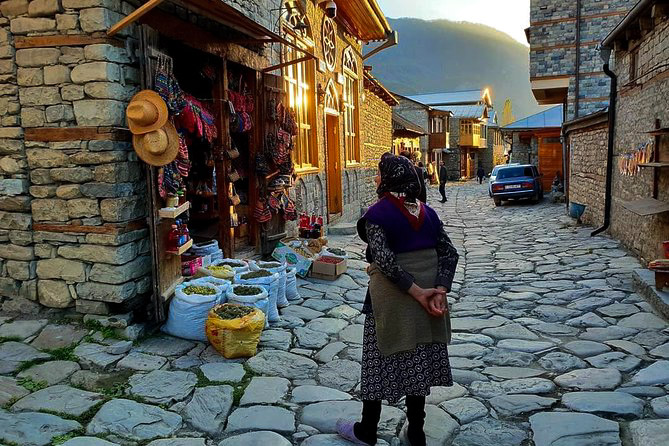
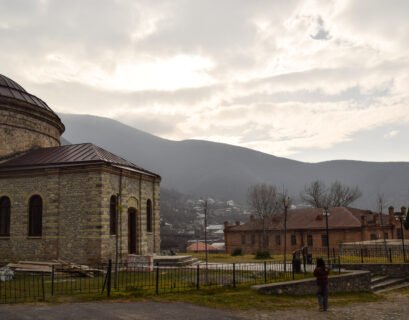
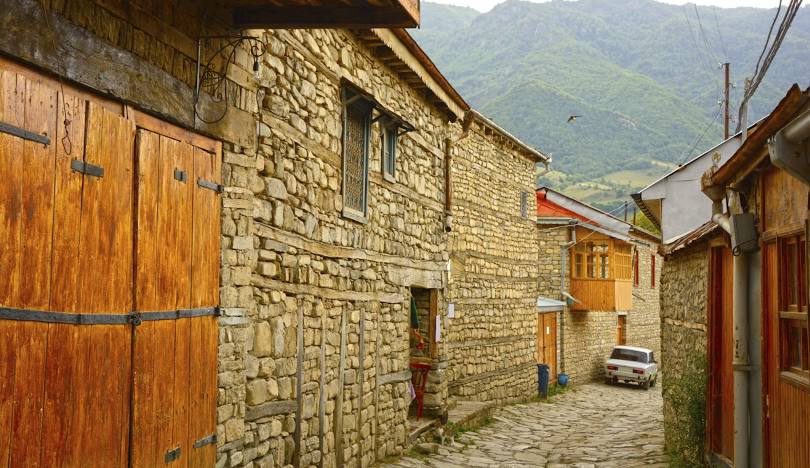
Lahij has preserved its character with astonishing fidelity. The stone-paved streets, architecture, and way of life in Lahij have remained remarkably unchanged for centuries and take you back to its heydays during Roman empire. Walking through Lahij does feel like stepping into a living museum where history is not on display but lived.
Village of artisans
Lahij has been celebrated as the village of artisans for centuries. Even today more than forty traditional crafts are practised here. It is, however, the coppersmiths who have earned the village its fame. The sight of craftsmen patiently shaping intricate copperware using techniques passed down through generations is captivating.
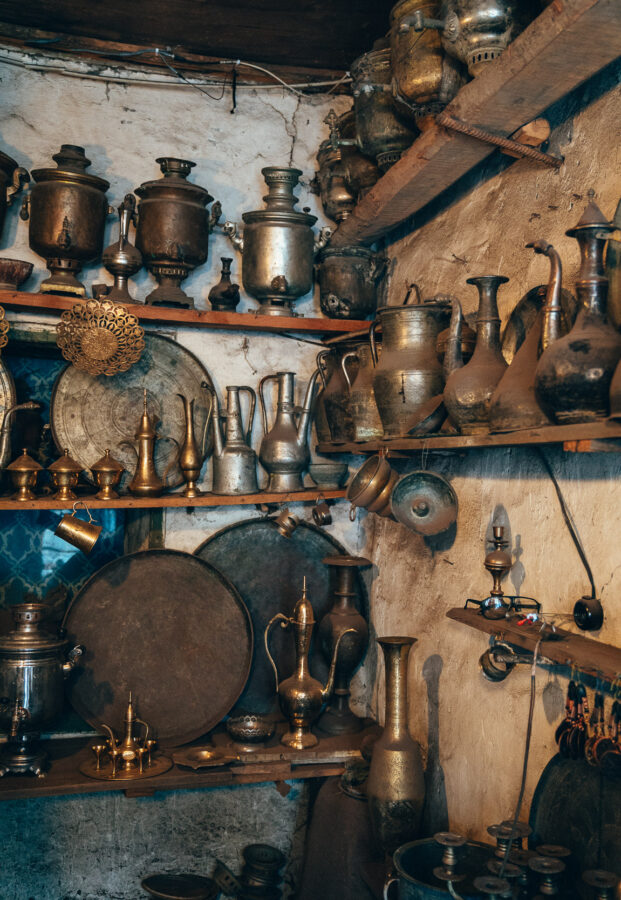
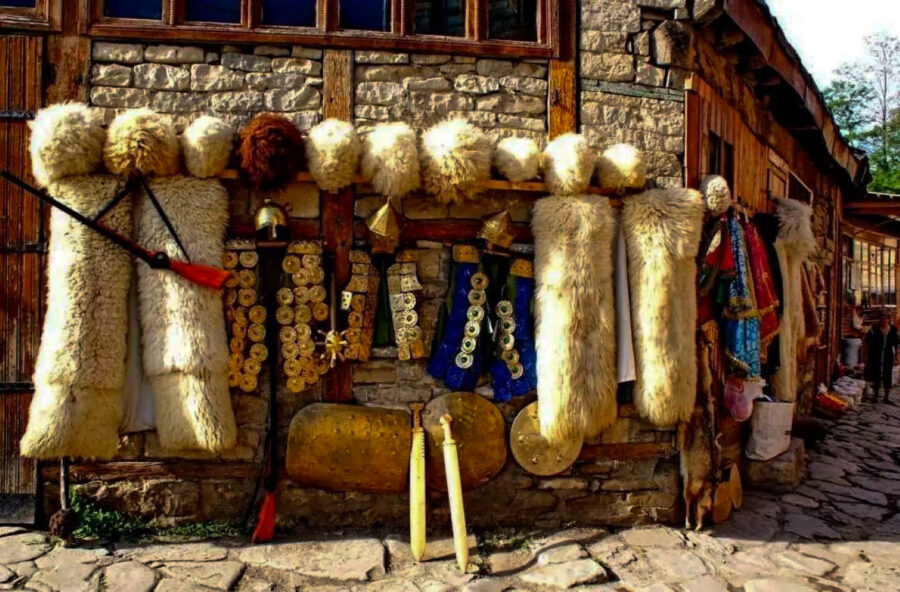
Even in the medieval period the village had become an important center of craftsmen in Azerbaijan. Lahij’s artisans have started to become very popular throughout Asia and Europe. In the 18th century, the city gained a reputation for producing cold steel weapons and copper. The village became a major trade point of copper pots and lamps and weapons. Some of the artifacts created here, still adorn famous European museums, especially the Louvre and the Hermitage.
You can still find the spirit of medieval times in the time-torn streets of Lahij. The village has preserved its cultural and historical identity.
The copper workshops
For most people, this is perhaps the reason to visit Lahij. And the coppersmith tradition is the heart and soul of Lahij. As we strolled leisurely along the main street, we passed one open workshop after another. Inside, artisans sat at their benches, patiently shaping plates, jugs, bowls, trays, and ornate decorative pieces using tools and techniques handed down through generations. The clamping on the metal is the most recognizable sound in Lahij. A steady, rhythmic tapping that comes from every direction, slowly bringing intricate floral and geometric patterns to life on sheets of copper.
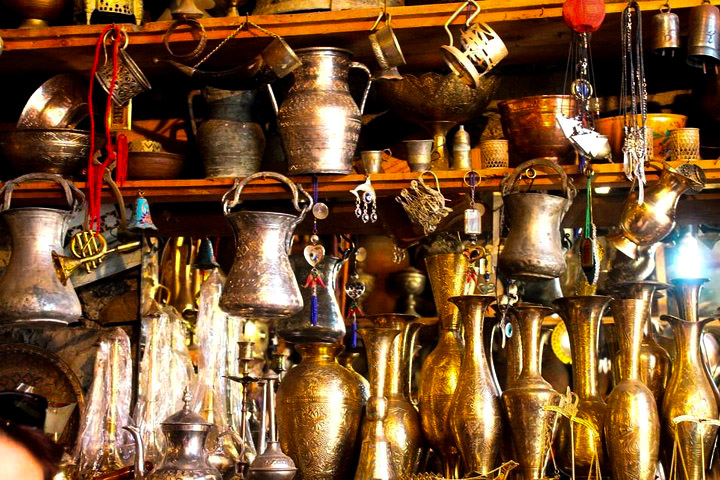
These are working workshops where craftsmen create, finish, and sell their pieces under the same roof. The artisans there have shaped every object on display. The craftsmanship is authentic, the production is real, and the dedication is impossible to miss. Even visitors with no particular interest in metalwork tend to stand and watch for longer than they expected.
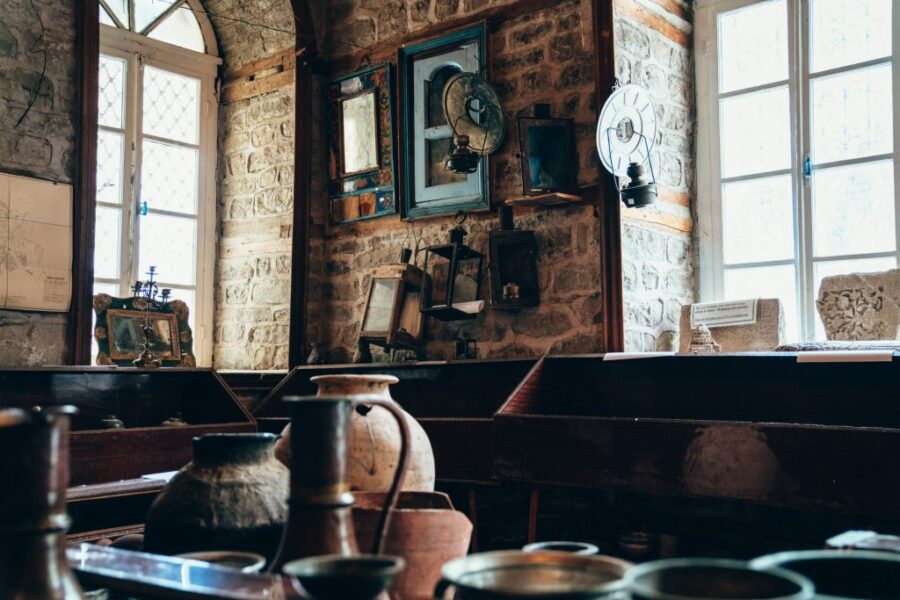
There is also a small museum that has documented the history of this art, and Lahij’s Silk Road heritage.
The Roman connection
Another thing that amazes you in Lahij is its centuries old drainage system. The system and design of this drainage system that cuts through the cobble stoned streets and the way it channels water through the village, is identical to what the ancient Romans used to build. You can notice narrow stone channels running alongside the lanes. These were designed to collect and carry rainwater through the settlement.
While there is no evidence that the Romans built Lahij or directly influenced its construction, the design principles are remarkably similar. Just like Roman settlements, drainage system of Lahij relies on gravity rather than mechanical intervention. The calculated slopes ensure that water flows efficiently away from homes and workshops.
A stop at a coffee shop
You know I rarely write about cafés or food stops when I travel. So whenever one finds its way into my stories, there’s usually a good reason for it. In Lahij, that place was the Lahij Coffee Museum, a charming little café run by a local family. The place has character. The walls are filled with old coffee grinders, vintage brewing equipment, and memorabilia collected over the years. This gives the space the feel of a tiny museum dedicated to coffee culture. And they serve everything from coffee, tea, to creamy milkshakes with love and warmth.
While I only had a few hours here, I would totally recommend giving Lahij the time it deserves. Lahij isn’t a destination that impresses you with dramatic attractions. It wins you over with its authenticity, craftsmanship, charm, and a pace of life. Lahij reminds you to slow down and find the beauty in the simplest of things in life.
How to reach Lahij from Shamakhi
Lahij is around 50–60 kilometres from Shamakhi. The road gradually leaves the open plains behind and climbs into the foothills of the Greater Caucasus, winding through increasingly dramatic mountain scenery. There is no particularly convenient direct public transport to Lahij. The easiest option is to hire a car or arrange a taxi from Shamakhi.
Hits: 191
Tags: A village of coppersmiths, Azerbaijan cities, Azerbaijan tourism, Cultural travel in Azerbaijan, Hidden Gems of Azerbaijan, Lahij from Shamakhi, Lahij village, Mountain villages of Azerbaijan, offbeat Azerbaijan, Places to see in Azerbaijan Last modified: August 16, 2026