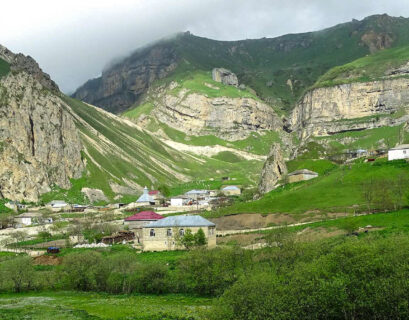
After experiencing the authentic soul of Azerbaijan and its multi-cultural heritage in Quba, and venturing into the remote mountain villages of Khinaliq and Laza, it felt only natural to discover yet another side of Azerbaijan. This exploration made me travel westwards from Baku to Shamakhi, a cauldron of history, art, poetry, and spirituality – a city where Azerbaijan finds its soul.
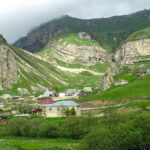
Shamakhi hits you with a mountain vibe and cool mountain air descending from the Greater Caucasus. The change is immediate. The moment you step off the marshrutka, you sense that you’ve entered a place with an entirely different rhythm. Shamakhi hits you with a realization that how different is Azerbaijan from the ever buzzing, dynamic life of Baku, and the crisp, liberating air of Caspian. The constant buzz of Baku gives way to quiet streets, traditional homes, and conversations that linger a little longer. As my guide Javid had told me, “If Baku is Azerbaijan’s modern, cosmopolitan face and Quba its multicultural crossroads, then Shamakhi is its heart, longing for poetry and love.”
The former capital of Shirvanshahs
Back in Baku, I was staying in a charming B&B just a stone’s throw from the Palace of the Shirvanshahs. The name wasn’t unfamiliar to me. And possibly the history had intrigued me to come to Shamakhi and find more about this chapter of Azerbaijan’s history.
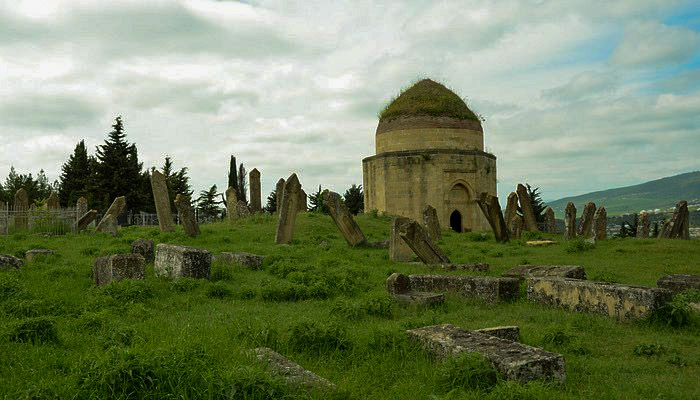
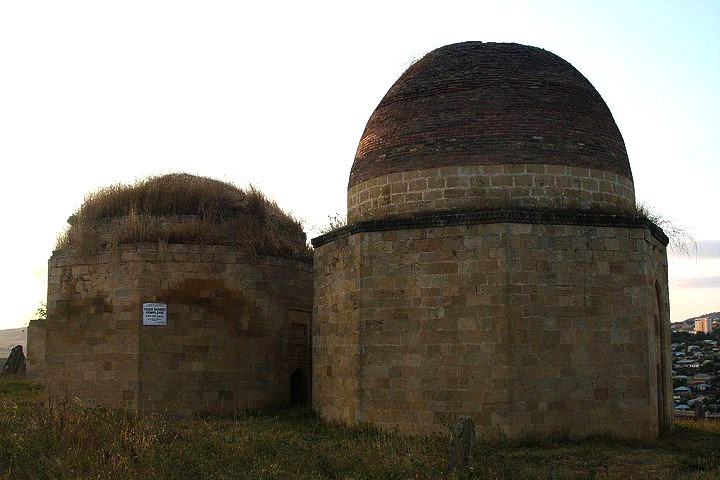
Long before Baku rose to prominence, Shamakhi was the capital of the Shirvanshahs from the 9th to the 16th century. Being a major city along the Silk Road, Shamakhi flourished as a thriving centre of trade, culture, and political power. Shamakhi was repeatedly devastated by earthquakes, as it sits in one of the most seismically active regions of the Caucasus. After the catastrophic quake of 1859, the capital was shifted permanently to Baku. This marked the beginning of Shamakhi’s gradual decline.
Despite this, Shamakhi still holds its old character. As an old city of the Shrivanshah, Shamakhi still has remnants of art and architecture of those bygone days. Its old streets, carrying the echoes of its glorious past, ancient monuments, weathered stonework, and traces of Shirvanshah art and architecture quietly remind visitors that Shamakhi was once the beating heart of medieval Azerbaijan.
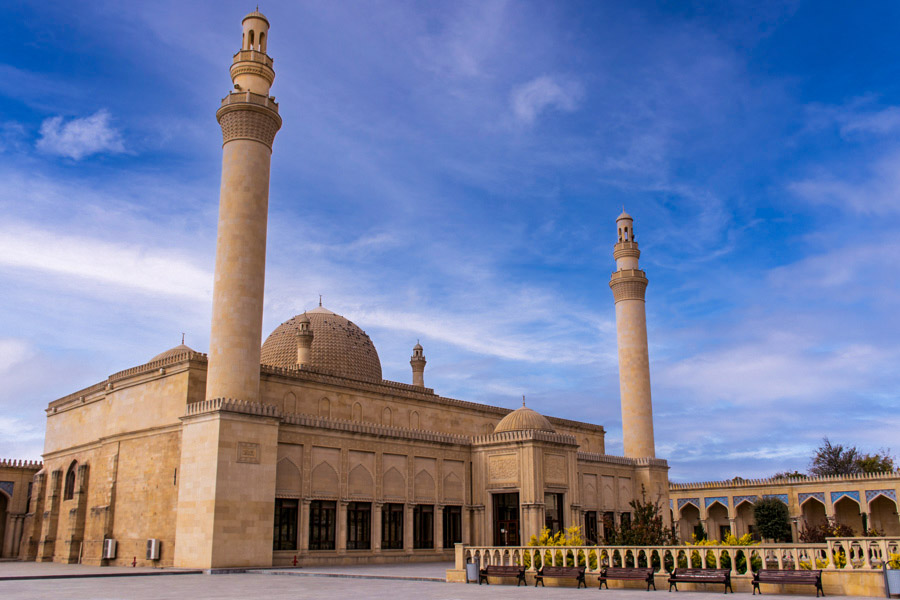
The first stop: Juma Mosque of Shamakhi
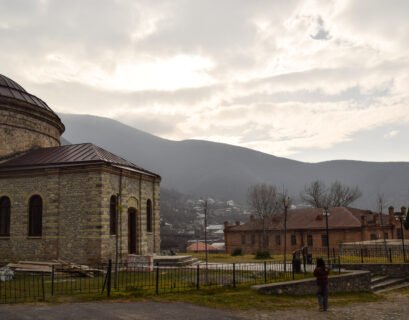
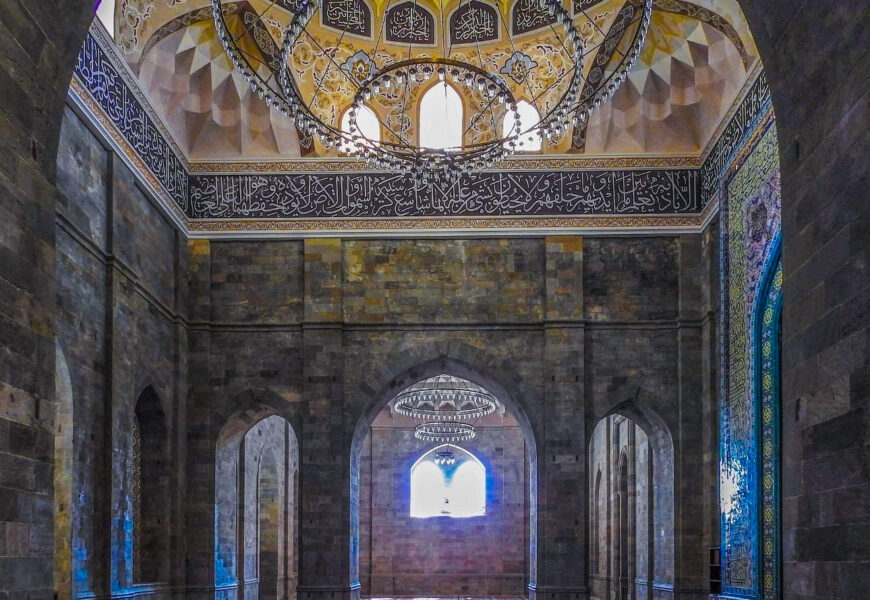
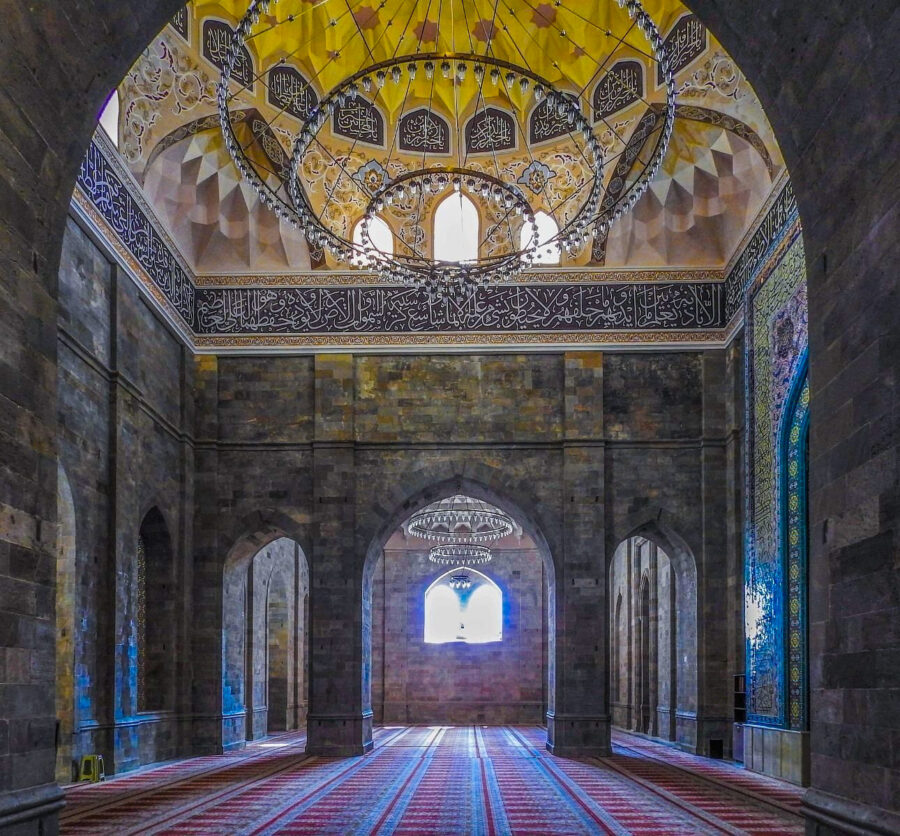
The first and definite stop in Shamakhi has to be the Juma Mosque. The mosque was built as way back as 8th century. It has been destroyed and built multiple times, since then. The structure is stunning, with its grand courtyard, elegant domes, and serene prayer halls. You can’t miss the peaceful vibes and historical weight of this mosque.
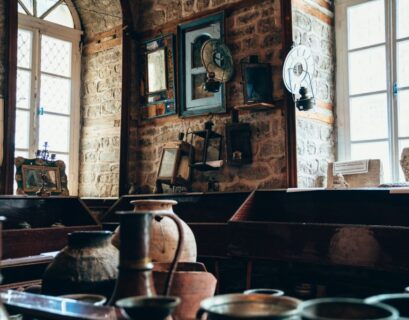
Another stop to immerse yourself in the history of Shirvanshah period is the Shamakhi History and Ethnography Museum.The museum preserves the region’s archaeological discoveries, cultural heritage, and everyday traditions, and offers an introduction to Shamakhi’s rich past.
Take a day tour to places around Shamakhi
There is a lot to cover in Shamakhi. Renting a car or taking a local tour to cover these places is a handy option. In Shamakhi, you are always within easy reach of mountain villages, wineries, forests, and Silk Road towns. I recommend giving oneself one full day to go around on these easy day trips. And the next day one can proceed to the next stop – Shekhi.
The first idyllic stop should be the Shamakhi Astrophysical Observatory, some 20 kms from the city. It is located on the Mount Pirgulu. The height guarantees panoramic views of the city and the surroundings. The observatory is also close to the Pirugulu National Reserve, which offers numerous hiking trails, and excellent mountain views. The location is known for its dark skies and high number of clear observing nights each year. This makes it suitable for guided visits, museum exhibits, telescope demonstrations, and seasonal stargazing programs. This makes it an excellent stop to learn some astronomy.
To the thousand years old artisan village of Lahij
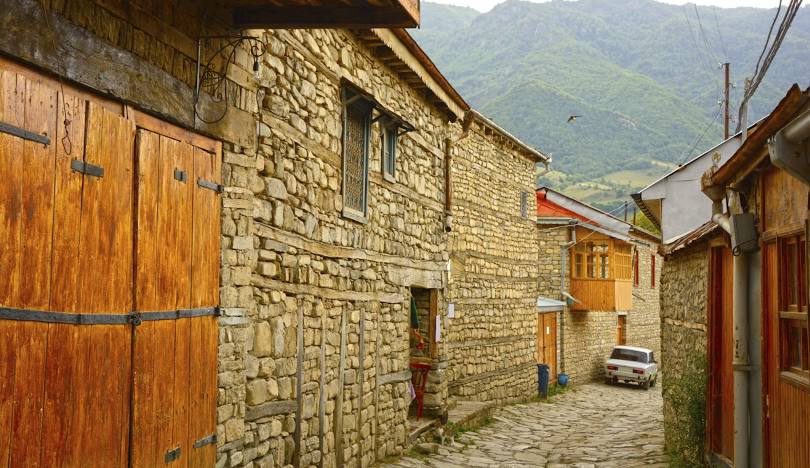
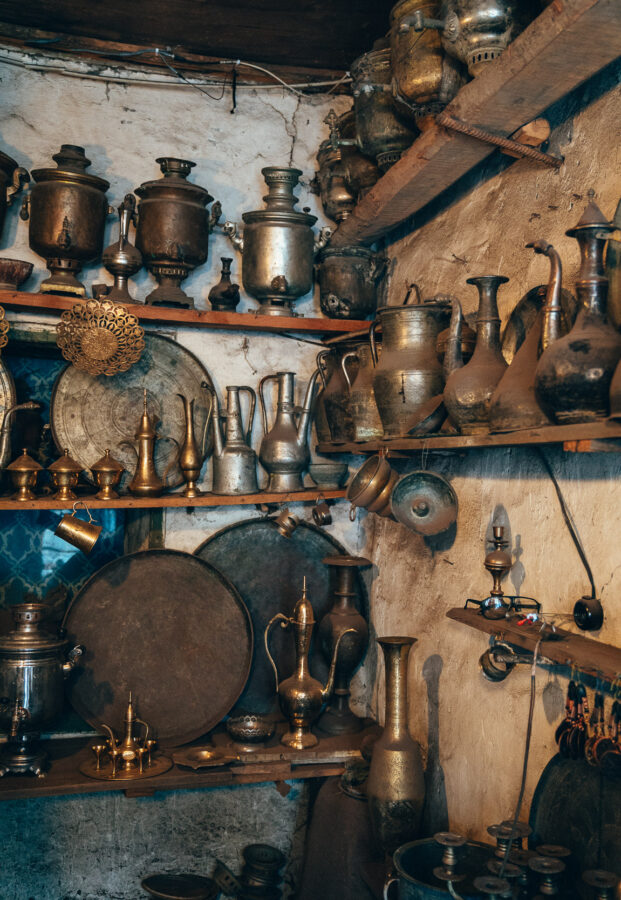
Lahij could actually be a reason enough to come to Shamakhi. Lahij surprises you with its beauty and the fact that the village has remained the same for centuries. The cobblestone street, the Roman styled drainage system, brick walled houses, and professions have remained unchanged for centuries.
Lahij sits at a high altitude, nestled between mountains and forests, with a river running parallel to its main street. The layout of the village and the street have fundamentally remained the same for centuries. The copper craftsmanship, has been practiced here continuously for hundreds of years. This incredible level of preservation, has made Lahij such a ‘must visit’ stop among travelers. Lahij effortlessly manages to take you back ages. The stone and wood houses, the cobblestone main street, the open coppersmith workshops where artisans work by hand – nothing here is reconstruction or restoration. It is simply continuity.
I would recommend to pencil in enough time for Lahij. The village may be small and easy to explore on foot, but the layers of history needs time to explore.
Off to the wine routes
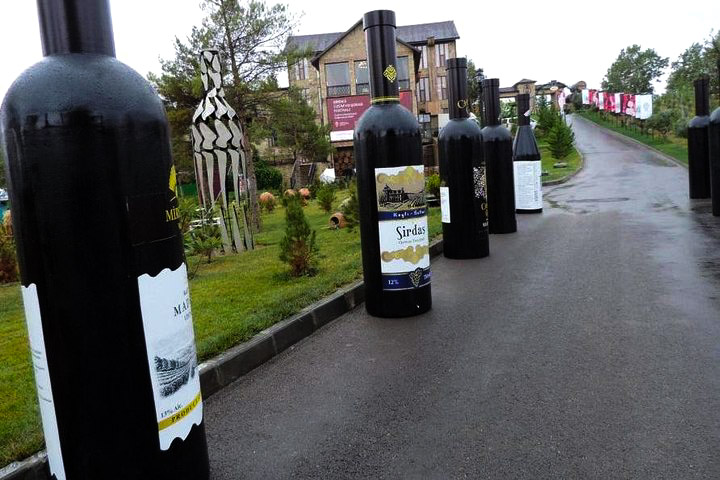
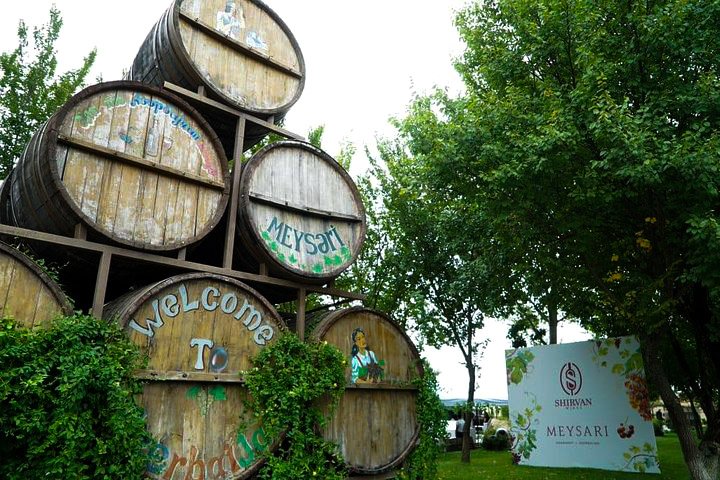
This must be the most pleasant part of the Shamakhi trip. Azerbaijan is one of the world’s oldest winemaking regions: the first evidence of viticulture on these lands dates back 8,000 years. And the cities of Shamakhi and Ismayilli happen to be epicentre of Azerbaijan’s wine culture. Ismayilli, a mountain district to the north, on the southern slopes of the Greater Caucasus, is particularly famed for the Chabiant hills. The hilly landscape gives Ismayilli wines their characteristic mountain purity. Chabiant hills is 80 kilometres from Shamakhi. We opted for something closer in hand, as we were hard pressed on time. We opted to go to Meysari, a small boutique winery a few minutes west of Shamakhi, and the only certified organic wine producer in Azerbaijan. Meysari is among the newest wineries in Azerbaijan, planted in 2014, with the first harvest in 2015.
Shamakhi brings many worlds together
When we left Meysari, with the vineyards stretching into the hills and the mountains beginning to disappear, I realized Shamakhi is more than a spot on itinerary. It is a place where many identities of Azerbaijan come together – its Persianate and Caucasian past, Islamic heritage, and long held tradition of poetry and statesmanship. This layering of history makes Shamakhi special. After witnessing it, I do realize the depth in Javid’s words ‘If Baku is Azerbaijan’s modern face and Quba its multicultural crossroads, Shamakhi really does feel like its heart’.
How to reach
Shamakhi is an easy escape from Baku, onto a westward journey towards Ismayilli and Sheki. The simplest option is by road. Regular intercity buses and shared minibuses (marshrutkas) connect Baku with Shamakhi, departing from the Baku International Bus Terminal.
Hits: 284
Tags: Azerbaijan cities, Azerbaijan tourism, Azerbaijan travel, Cultural travel in Azerbaijan, Hidden Gems of Azerbaijan, Mountain villages of Azerbaijan, offbeat Azerbaijan, Old cities of Azerbaijan, Places to see in Azerbaijan, Shamakhi, Silk Road in Azerbaijan Last modified: August 16, 2026