The excursions and discussions of the first day made me aware of Jawai – its cultural landscape, layered history, intricate social structures, and its quiet but powerful place in the broader conversation on coexistence. And Jawai was more just a destination; it is a living case study on how humans can exist with wildlife. The stories also reminded of my college classes on eco-tourism, reminding me how responsible travel can become a meaningful channel for conservation, community ownership, and sustainable futures. But I was still to meet the leopards of Jawai – the charismatic inhabitants who have carried this landscape to national fame and are a central figure of Jawai’s economy.
The staff at the Jawai wilderness lodge had thoughtfully mapped out the itinerary of day 2 for me. It was simple, yet perfect. I would head out for a leopard safari twice—once at dawn and again at dusk—each in a different part of the landscape. I was elated thinking that this would give me two chances to encounter this elusive, shy feline in its natural habitat. By our discussions, I had got aware that leopards, in this geography live not far from human settlements. They are, in fact, an integral part of the village landscape. One thing I was particularly eager to observe was how fragmented the leopards’ territories were. This was my first time seeing leopards living beyond the bounds of dense forests. This fact alone filled me with a quiet anticipation, and an eagerness to understand how these big cats had adapted to an unconventional home.
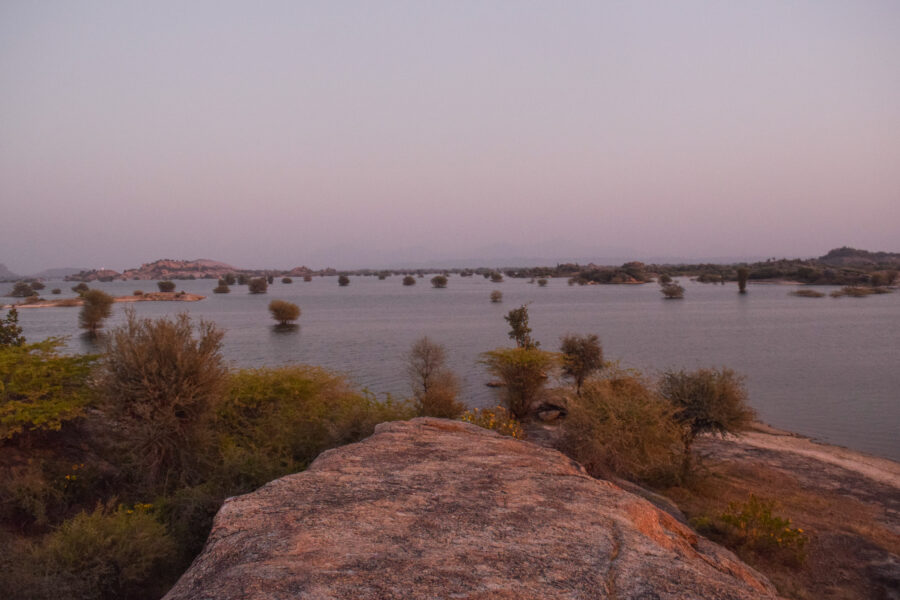
The dawn brought the moment I had prepared myself for so long. We left at around 7:30 in the morning. Any earlier, my guide explained, would be pointless, as the leopards would still be resting deep inside the natural caves that dot the Jawai landscape. The sharp chill in the morning air made me concur with his reasoning.
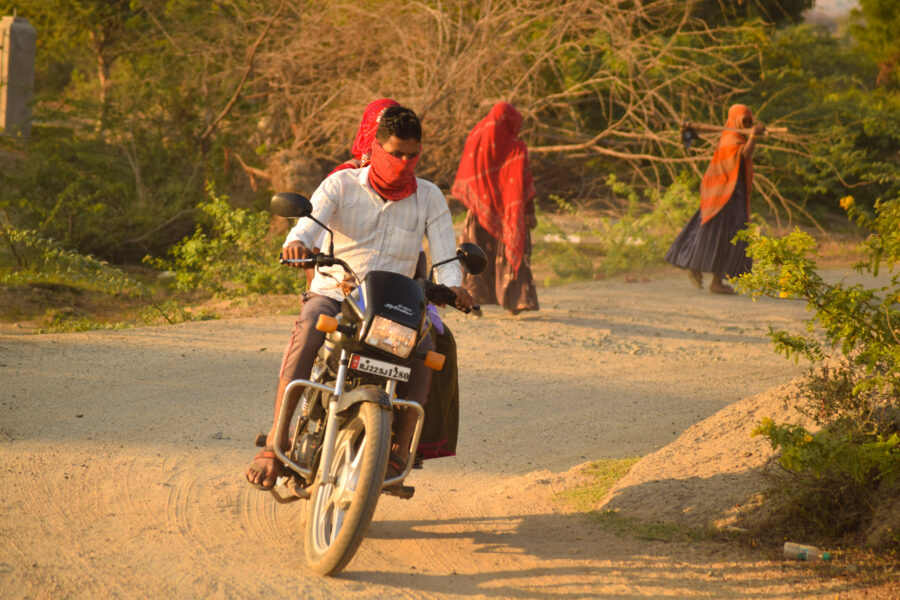
We set off, the vehicle threading its way through the village’s narrow lanes before heading out towards a more deserted stretch of land, scattered with Babul trees and thorny shrubs. The trees rose as silent silhouettes in the diffused morning glow. Along the way, we crossed paths with shepherds easing their flocks into the day. The shepherds on their way. The thought of being in the leopard territory, sounded so in vibe with the stories I had listened to yesterday. Soon we stepped into the forested stretch interrupted with giant boulders and hillocks that looked like perfect places where leopards could thrive.
Our first stop was barely a mile from the village. This was an amusing reminder of how seamlessly human settlement blends into the leopard’s domain in Jawai. Our guide pointed to a cluster of boulders, which was a resting place of a resident leopard family. We waited in quiet anticipation for them to emerge from their refuge. Seeing no sign of the leopard family, we continued to a second vantage point.
A leopard’s territory can stretch anywhere between 5 and 15 kilometers. This means that even in Jawai, with high leopard density, sighting is never guaranteed. There is, however, one habit that works in a visitor’s favour: leopards often return to the same resting places day after day. With no tigers or other competing carnivores like wild dogs in the area, they have little reason to abandon these familiar resting spots.
We drove off in a completely different direction, heading towards the main road that links Doodhni village to the nearest town. From there, we turned into a narrow, deserted track flanked by scrub on both sides. It looked nothing like a forest, yet it lay far from any sign of human life. Within minutes, we arrived at an old, abandoned mine. Our guide explained that this was the resting place of a female leopard named Neelam. She had been sighted there frequently in recent weeks and seemed to have made the mine her safe haven.
I wasn’t as lucky. There was no trace of Neelam that morning. But what stayed with me was the remarkable ability of leopards to adapt to their surroundings. From a sparse, rocky woodland to a deserted mine, I had already witnessed two completely different habitats that these cats call home—far from anything I had imagined.
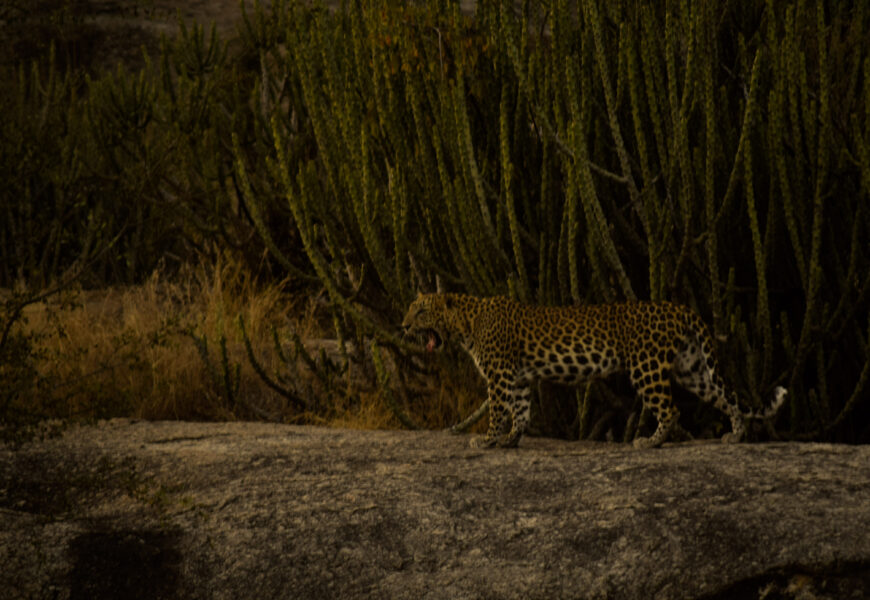
We soon left for the third spot—where I finally had my first sighting of a female leopard. Yet the moment was tinged with disappointment. From the mine, we retraced our way to the main road and took another turn that led us farther from human habitation, towards a lonely stretch near a hillock. This was the territory of another female.
What unsettled me was that right in the heart of this leopard’s territory, a resort was under construction. And, ironically, we spotted the leopard barely a short distance from where the workers were working. Our guide explained that the entire area falls outside any official wildlife sanctuary and remains privately owned. This leaves it vulnerable to unchecked development, even in areas that leopards have called home for generations.
With a lump in my throat, still shaken by what I had just witnessed, we headed back to our resort. Even during breakfast, the unease lingered—an uneasy feeling that the scene might look no different during the evening safari.
We set off some 20 kilometers away from our resort to a village named Sena, in the evening. It was almost the other side of the dam. The landscape opened into sweeping scrubland, broken only by scattered hillocks and rugged rocky terrains. The landscape looked so perfect for leopards to thrive.
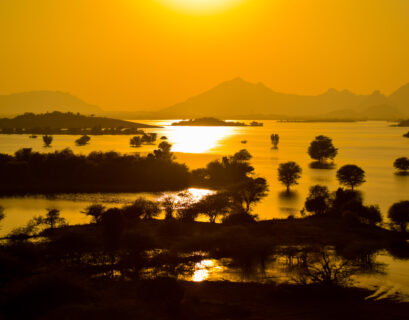
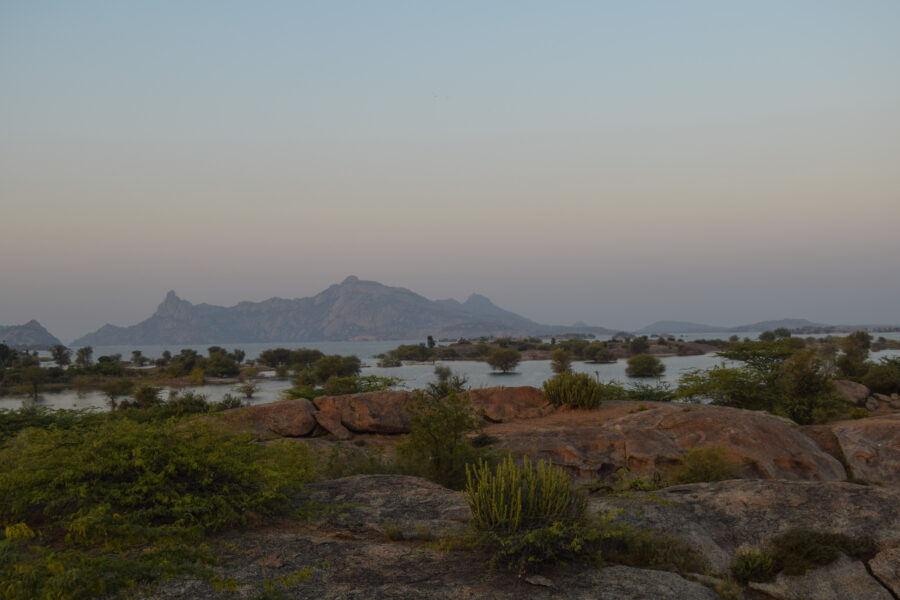
Our guide took us to the farthest end towards the dam. The landscape grew wilder and more dramatic as we drove. The most thrilling part was the ascent itself—driving uphill across the rocky terrain. We reached the dam, cradled by hills. The vast body of water with giant boulders and hillocks on both sides, looked surreal. What was more interesting was that some resorts had arranged high tea for their guests. Trust me, the panoramic view from there was so captivating, that I wanted to stay there for a while. The sun was slipping down the horizon, and we had to press on, to try our luck at leopard sighting.
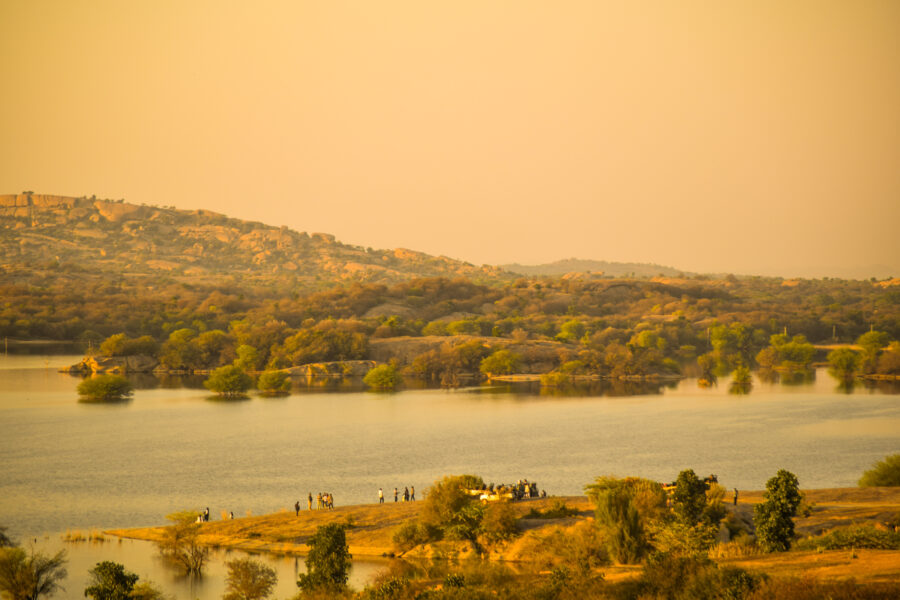
We made a move, and were soon at a completely different landscape – scrubbier and in parts with dense vegetation. We got our cue from the racing vehicles that the leopard could be near-by. Thereafter, we closed in and sped towards the hill some distance away. There, atop a massive rock, sat a mother leopard. And several safari vehicles lined up right in front of her, like courtiers making a beeline to pay homage to the royal guardian of the forest.
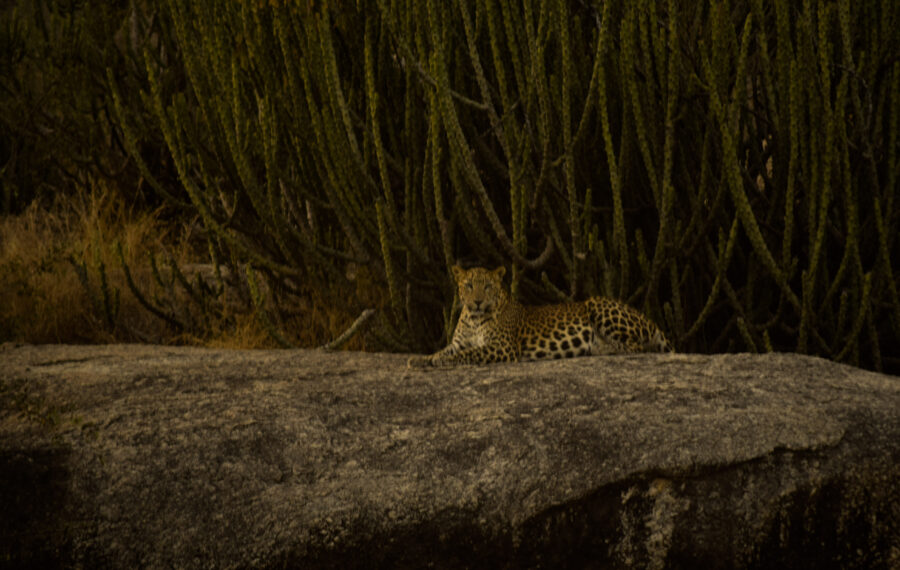
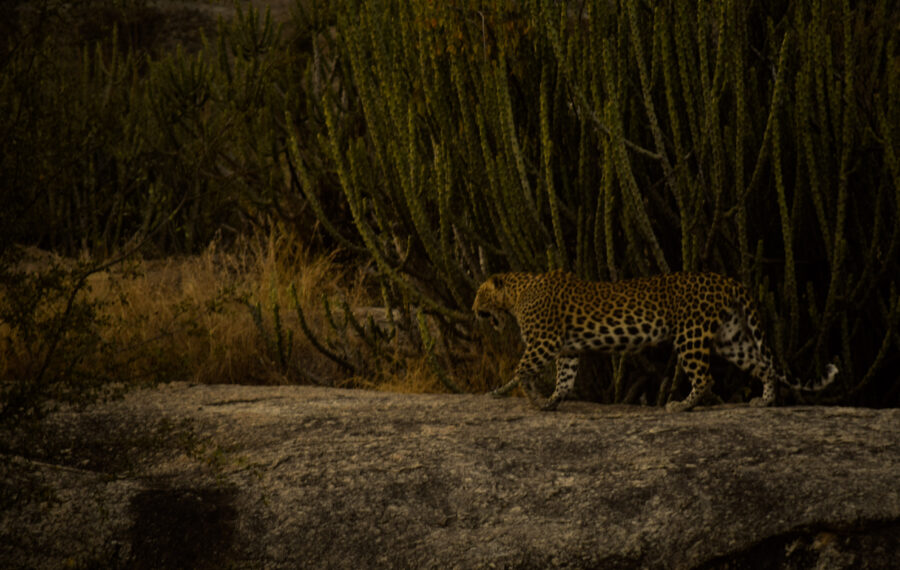
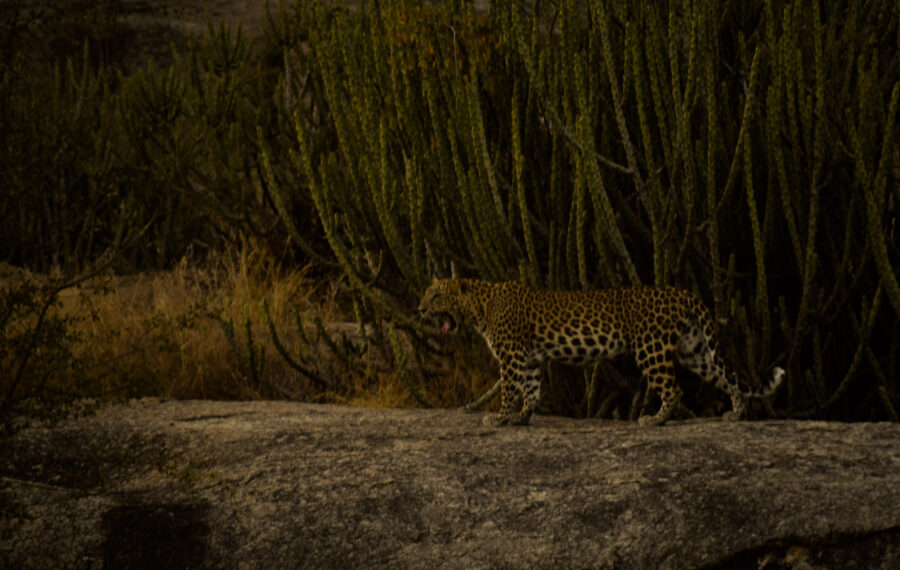
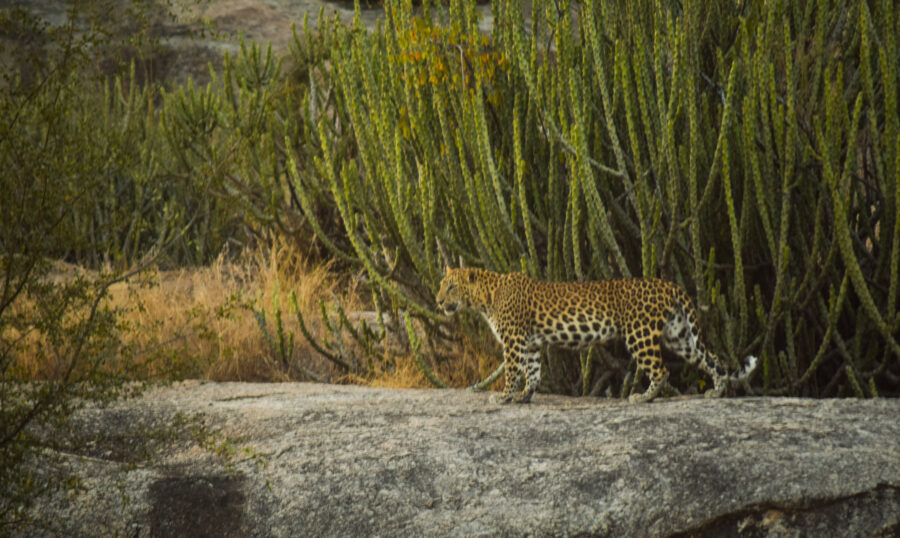
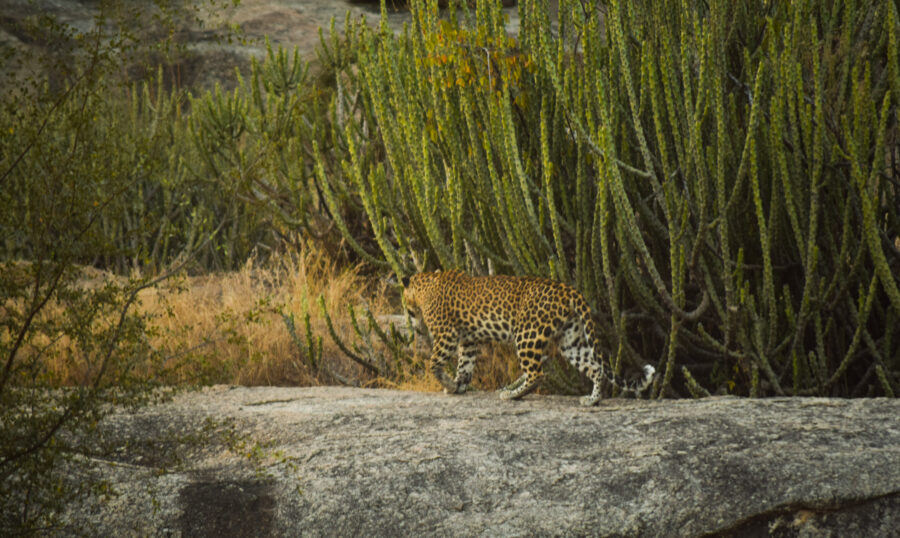
The mother leopard sat there unperturbed, as though she had got accustomed to the attention. Our guide told us that she had recently given birth to two babies in a cave in the same hillock. After about ten minutes, she rose, stretched into a languid yawn, and padded around the far side of the rock. In another minute she disappeared into the bushes, bringing the spectacle to a graceful close.
You know the usual feeling after a safari. It’s of accomplishment. You can’t put to words the emotions after seeing such a graceful being in their natural habitat and being educated about their habits. No pictures can capture what you felt. It’s something you can only feel when you are there. And I felt that calm and surge, at the same time.
This blog is in collaboration with Jawai Wilderness Lodge who hosted me for this trip.
Read part 1 of this blog here – Meeting the leopards of Jawai – I
Hits: 743
Tags: Black leopard sighting, Jawai Bandh, Jawai leopard safari, Jawai wildlife sanctuary, Leopard safari in Rajasthan, Leopard sighting in Jawai, offbeat in Rajasthan Last modified: December 14, 2025