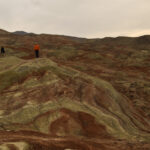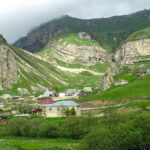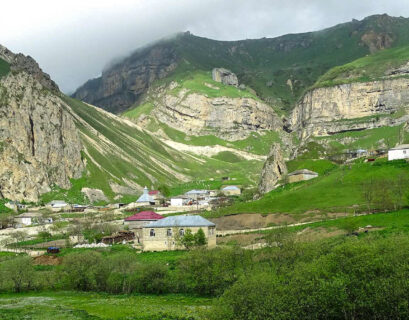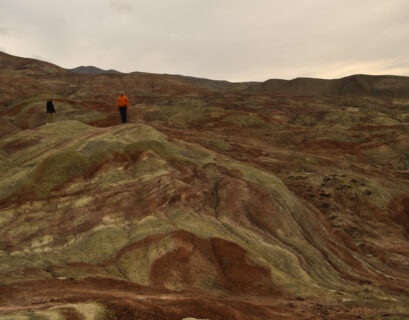
Even if you have a handful of days in Azerbaijan, make sure you include the villages of Khinaliq and Laza in your itinerary. Khinaliq is the highest and most remote village in Azerbaijan and Laza is an untouched rustic beauty. And as our guide Javid told us, Khinaliq is one of the highest inhabited places in the world. It is also one of the oldest, with a history that spans over 5,000 years. Khinaliq has its unique culture, language, and breathtaking landscapes. And the village offers a rare glimpse into a way of life that has remained largely unchanged for centuries.
We left early in the morning from Quba. The visual manna started to manifest right after leaving the city boundaries. The road was swooned by forests on both sides, interrupted by an occasional hamlet, or a resort, a picnic trail, or the army settlements. Soon the grandeur of the Caucasus began to work its magic. Soon the forests were replaced by verdant meadows, and then by raging mountain river and gorges. Tracking the course of a raging river, the road ascended higher: twisting one way and then the other. The road was well worth the odd hairy moment to ascend.
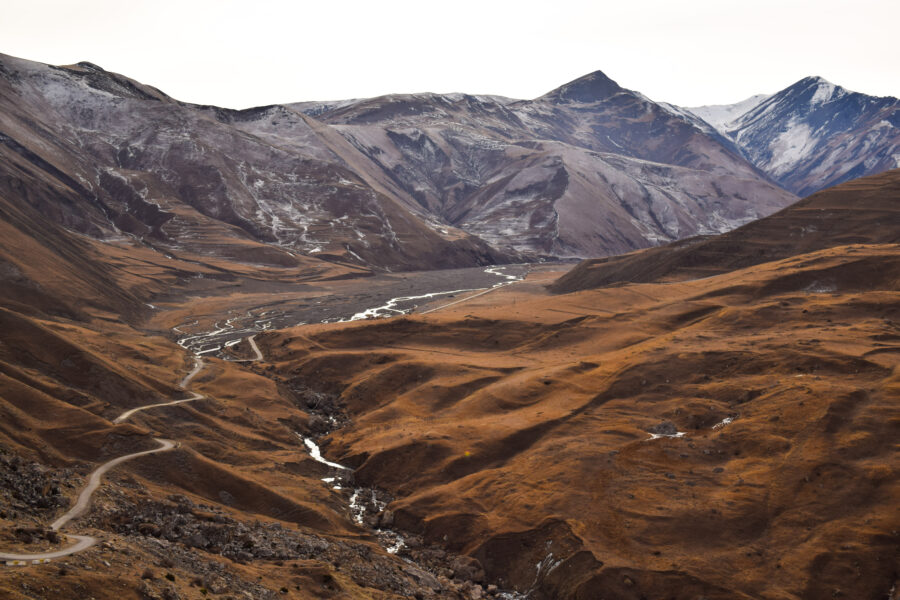
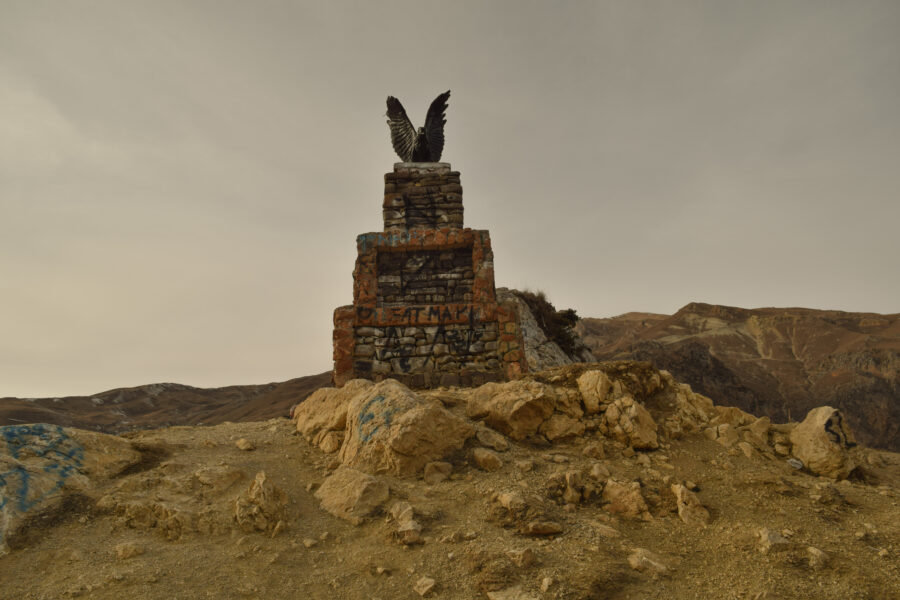
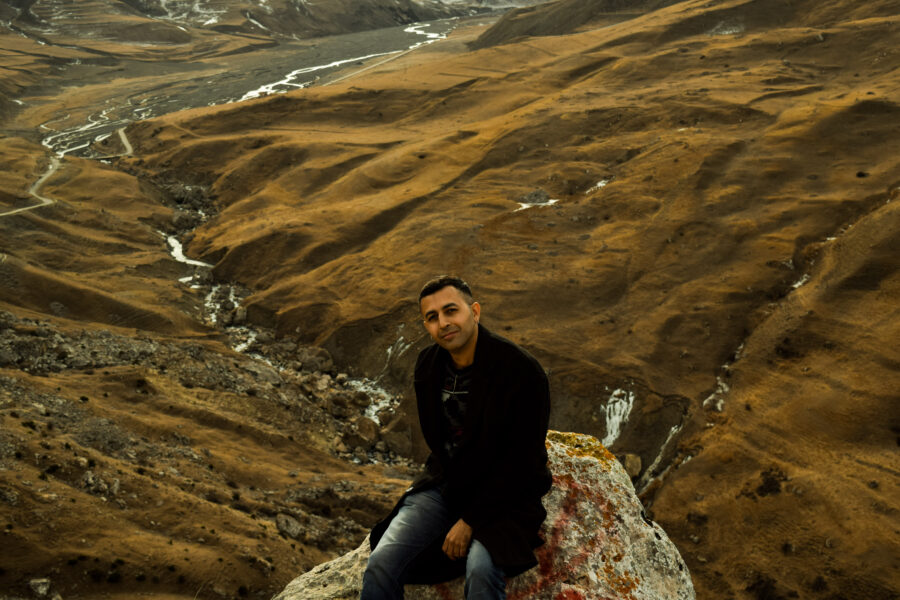
The views only grew more spectacular as we made our way towards Khinaliq. The entire journey was a humbling experience—an extraordinary trail that leaves you feeling privileged to have witnessed such grandeur. Midway, we stopped at a lookout aptly called Eagle Point, marked by a stone pedestal crowned with an eagle sculpture. Standing there, we soaked in the crisp mountain air and the profound silence of the highlands. The sweeping vistas of the valley were truly heart-stirring. The Caucasus Mountains seemed to be at their most magnificent, unfolding before us in all their rugged beauty and timeless splendour.
Legend of Khinaliq
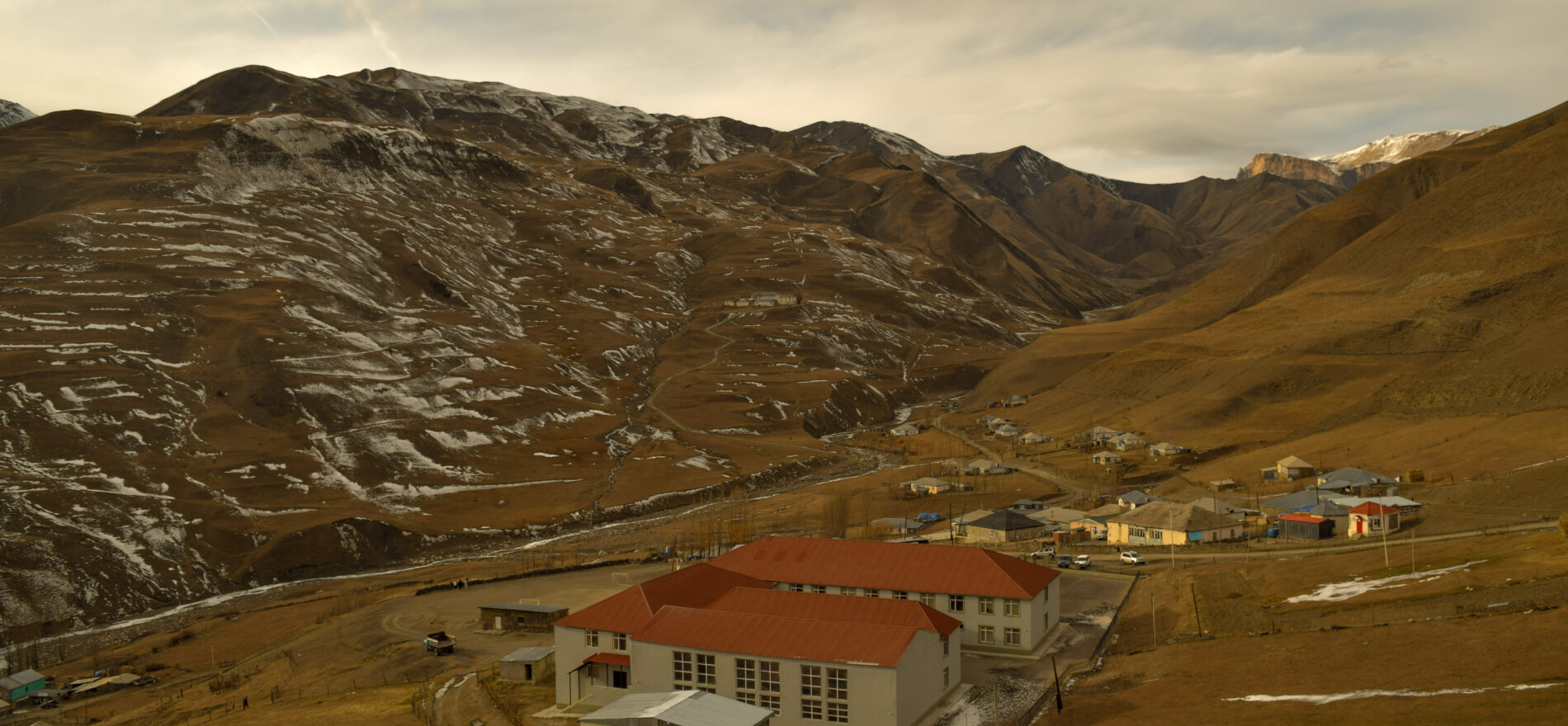
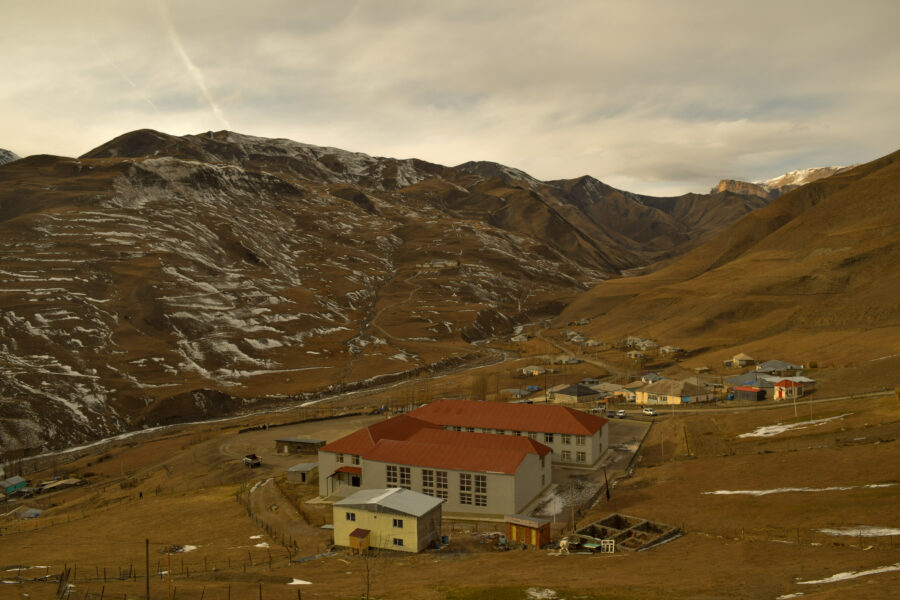
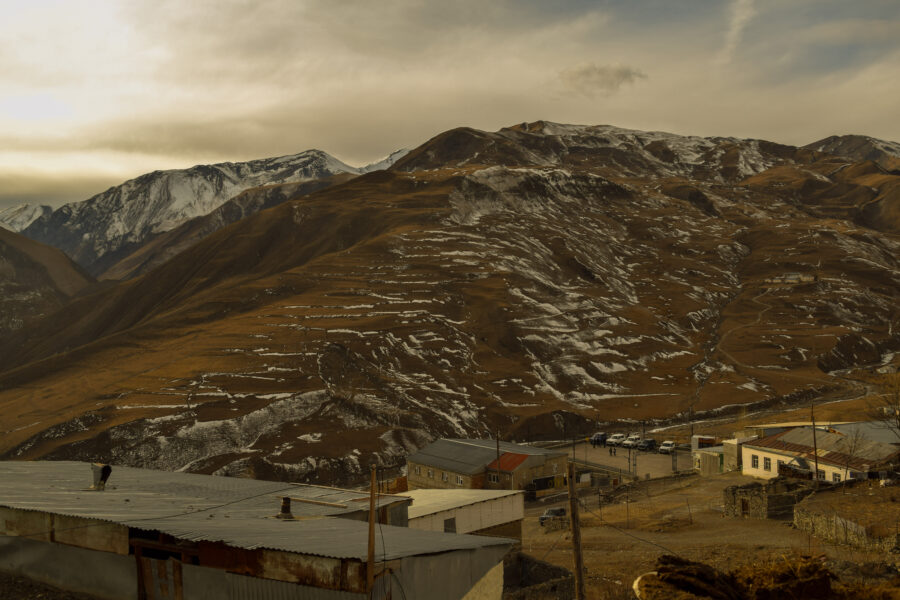
Finally, after a drive of around 2.5 hours, we reached Khinaliq. The scenic views were as stunning as I could have hoped for. Legend has it that this settlement has been inhabited for the past 5,000 years. It is one of the oldest villages in the region. Due to its isolation, the villagers have been able to preserve their language, tradition, and their indigenous roots. In Khinaliq, people speak their own language called Ketch. The language is not related to any known language family. People of Khinaliq follow a combination of traditional animistic beliefs and Islam.
The legend also say that this was the place where Noah’s Ark had landed at the time of the Biblical floods. The villagers in Khinaliq consider themselves descendants of Noah.
A taste of tradition
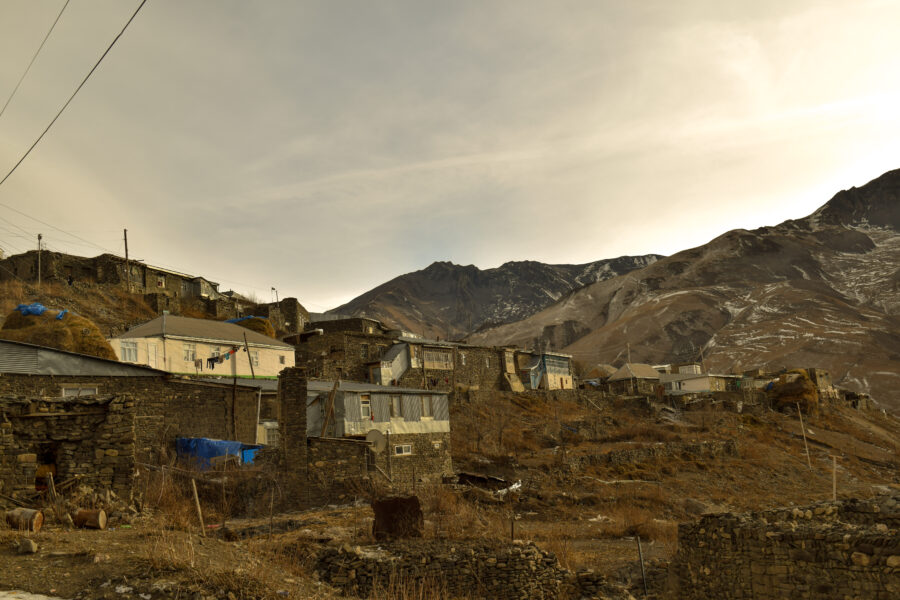
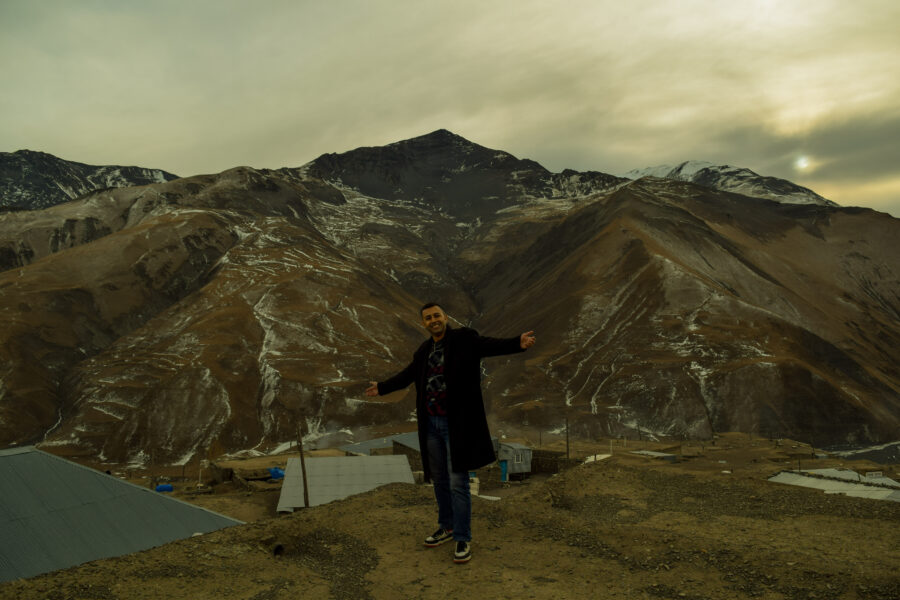
The air had grown thinner, and the views from the village were breathtaking. Eagles soared overhead, and the clouds seemed within reach. The remoteness and simplicity of Khinaliq stood out as a stark contrast to the frenetic pace of modern life. We zig-zaged our way up through the streets. In contrast with the deserted landscapes, the village seemed full of life. There were small shops selling the essentials. Kids rushed to greet us with smiles, and jovial shopkeepers showed the woolen textiles that are specialty of this region.
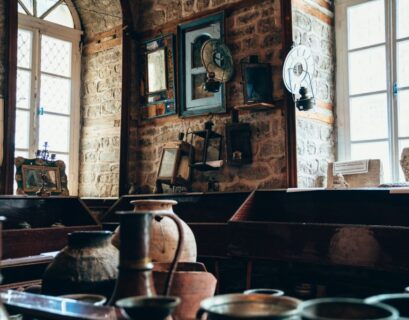
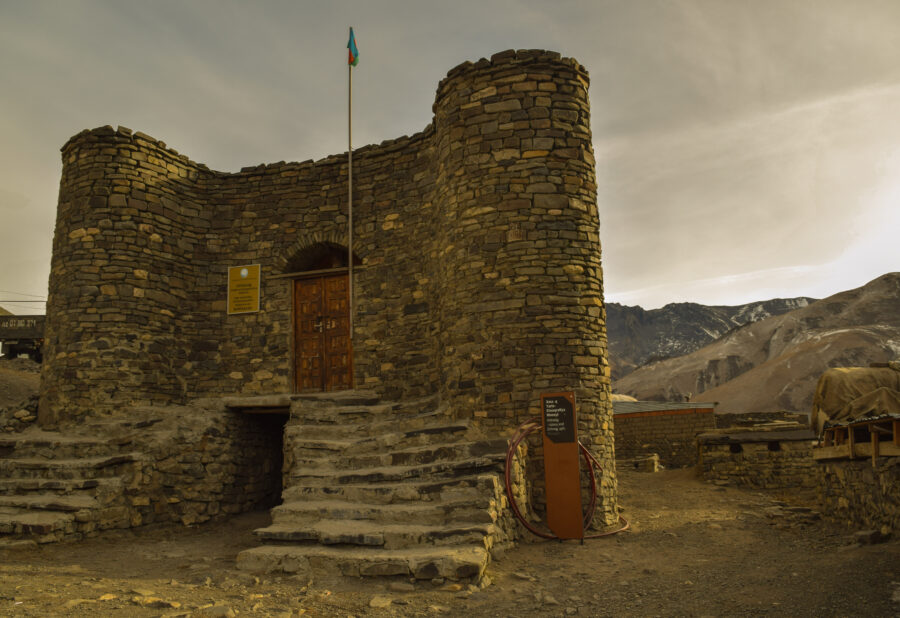
I paid a quick visit to the museum in the village. It may look small but hosts a lot of old documents and artifacts to give you a sound understanding of the old cultures of Khinaliq.
A meal of togetherness
Our arrival was met with the kind hospitality of our host Rauf. Our guide, Javid, had told us that the lunch would be simple, but hearty. But I had a different mind: wearied by all the travel, I wished for an Azeri tea to begin with. Lunch could wait a bit. The suggestion was met with applause from the other travellers in the group. As we gathered around the table, a group of strangers united by the journey, I felt a sense of connection that transcended language and culture. It was also a time to know about each other. A pot of tea with Azeri candies triggered conversations and an organic connection that spanned all boundaries of geography and culture.
Soon after, Rauf served us a hearty traditional lunch. The lunch he prepared was a feast of traditional Azerbaijani dishes. Each bite was a testament to the region’s rich culinary heritage. After lunch Rauf gave us a tour of his house, with its different layers, the Azeri tradition of weaving carpets, traditional crafts, and a look into life in Khinaliq.
Hike to the Fire Temple
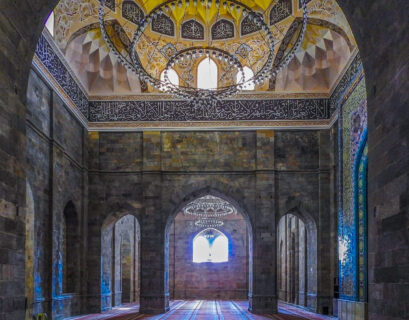
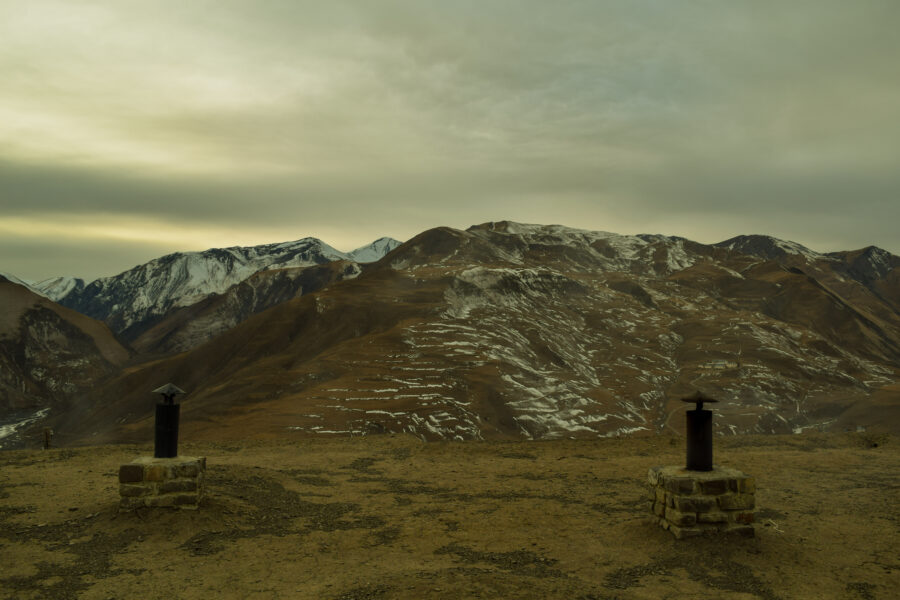
He took us around the village to the Jami Mosque, and the different places of animistic beliefs. The highlight of the village tour was the 5 km hike to the ancient Fire Temple perched high above the village. We crossed the rolling alpine meadows and rocky slopes, with every turn revealing breathtaking views of the surrounding Caucasus Mountains, to reach the Fire Temple. As I looked back at the village, the stone houses of Khinaliq gradually shrank into the landscape. It seemed we were on to the remotest corner of this remote landscape.
The hike was moderately challenging, but every step was immensely rewarding. It offered moments of quiet reflection amid nature’s grandeur. Reaching the Fire Temple felt like stepping back through centuries of history. Standing beside the weathered structure, I breathed in the panoramic views stretching across valleys and peaks. Looking out across the endless peaks, it was easy to imagine the generations of pilgrims and travellers who had crossed these rugged mountain passes long before us. The hike was a perfect way to introduce ourselves to the history, adventure, and raw beauty of the Caucasus.
A bagful of memories in Khinaliq
I wanted to stay back in Khinaliq for the night. And Khinaliq offers nigh halt options in various homestays. This can cost around 30 Mannats ($20) including stay and food. The stay options are modest. Yet, imagine spending a night at this remote corner, taking the time to appreciate the impeccable beauty of Khinaliq. Imagine the starry night that would greet you, and the soft, crisp mountain sun to wake you up.
I couldn’t stay back as I had to head to Laza the next day. But do pencil in more time to spend a day or two in Khinaliq. Take a trek to nearby villages of Qalayxudat (11 kilometers) or Jek (13 kilometers). One can even hike to Laza from here. But this will take you a full day over a mountain pass and a guide is recommended. As the day ended and we began our descent back to Quba. I carried with me a bagful of memories and warmth of people of Khinaliq. The trip was a reminder of the beauty that lies beyond the familiar. The silence of the landscape would echo in my soul for long, and the hike to the Fire Temple would serve as a reminder that I visited this remote, happy corner.
Hits: 66
Tags: Azerbaijan tourism, Azerbaijan travel, Cultural travel in Azerbaijan, Hidden Gems of Azerbaijan, Hiking in Azerbaijan, Khinaliq, Khinaliq Azerbaijan, Mountain villages of Azerbaijan, offbeat Azerbaijan, Places to see in Azerbaijan, Rural Azerbaijan, Traditional villages of Azerbaijan Last modified: July 5, 2026