To be honest, Quba wasn’t even on my Azerbaijan radar. Most travel blogs either skip it entirely or briefly mention it as a pit stop en route to Shahdag Resort or the mountain village of Khinalik. I’d planned to do the same – just a quick pause to see the ancient cultures breathe in the Red Town (home to Azerbaijan’s historic Jewish community) and the Genocide Museum. But a last-minute change of plans sent me chasing the Candy Cane Mountains, and an unexpected detour to Laza. This shift turned Quba from a stopover into an overnight stay, and gave me the chance to explore this ancient city. I uncovered layers of holiness, history, and haunting stories hidden behind its walls and beneath its streets.
The drive north from Baku feels like leaving one century for another. First come the oil derricks, rusting towers, and dystopian factories. But around fifty miles in, the landscape softens. The air feels greener, the setting more rural. Roadside hawkers sell buckets of smoke-tinged fruit, and goat carcasses hang like laundry from makeshift lines along the highway.
Quick stop at Cande Cane mountains
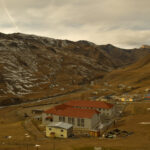
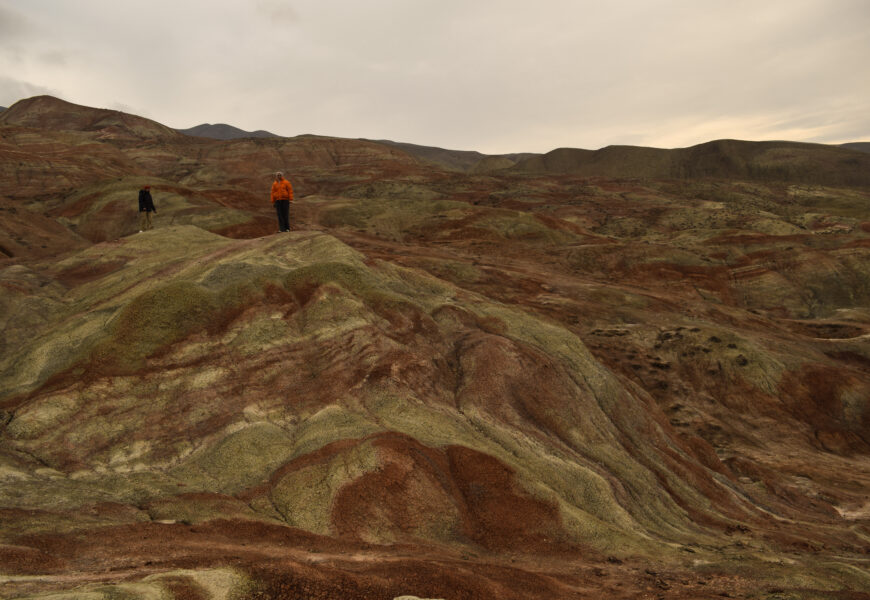
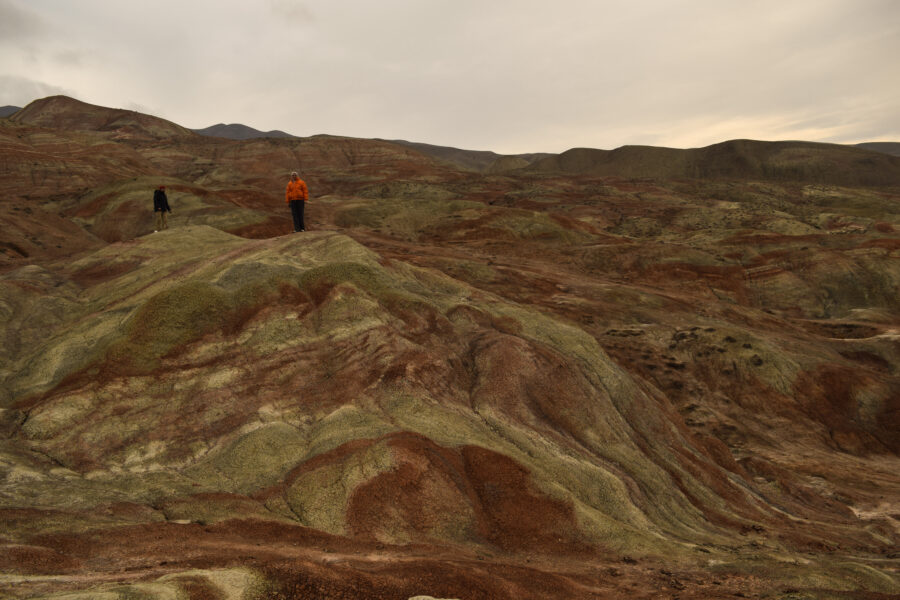
We took a slight detour of around 10 kilometres to the candy cane mountains. The landscape shifted again – this time from open grasslands to mountainous ridges. From a distance you can spot the Candy Cane Mountains rising from the earth, very distinct because of their swirls of deep red, soft pink, and dusty white shades. These eroded Badlands look less of a natural geology and more of a bag of candies. There are no trees, no trails, just undulating waves of crumbly earth that crunch underfoot like broken sugar. And the coloured mountains – perhaps a sign of high erosion and presence of metallic dust – shift colours under the changing light—fiery at noon, almost pastel by late afternoon. Locals call it “candy” for a reason, but I marveled at seeing something so bizarrely beautiful.
The sleepy city of Quba
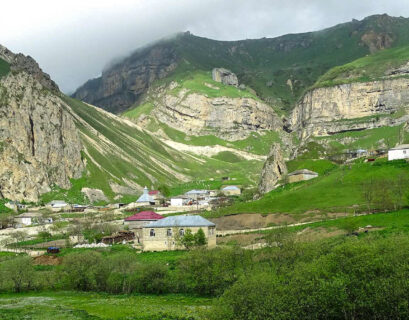
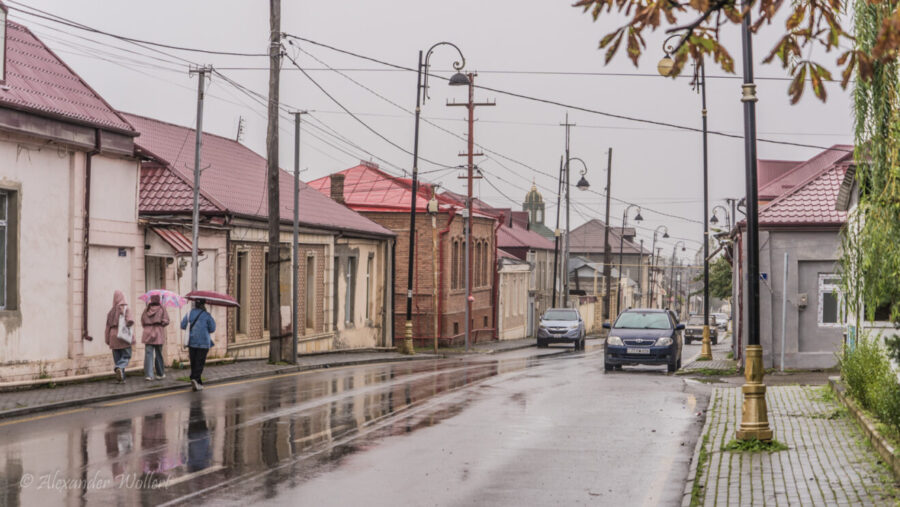
Quba was still far – almost another one hour of drive. Quba comes across as a sleepy after-thought of a town – where life has been slowed down. No sign of tall buildings, shopping complexes, or even lavish cafes – the quintessential landmarks in Baku. In Quba, ancient streets of history whisper, and nature stuns before open-air and breathtaking mountain views. It didn’t take me long to realize that the decision was right to pencil in more time for Quba. I could totally imagine that Quba, a city steeped in history and nestled at the foothill of mountains, would be a popular summer destination for Azeri locals.
After lodging myself in the hotel, and a pot of Azeri tea with some buns, I decided to set off to explore Quba.
The Jewish shtetl: Red Village
This has to be one of the finest pieces of history Quba has to offer. The Red Village, across the Kudyal River, is known as the world’s last remaining shtetl. A shtetl is a village in Eastern Europe that is entirely or largely Jewish. There were once thousands of Shtetls across Europe, stretching as far as Ukraine. The Nazi invasion into the Soviet Union destroyed most of these, while others disappeared under the Soviet-regime’s abolishment of Jewish religious practice. This makes this Red Village, a last remaining piece of Jewish history in these lands. Once there were close to 18,000 Jewish living in the village. With time many migrated to Israel, leaving around 4000 who now call the village their home. However, most of these have migrated to Baku for work and only come once a year to the village.
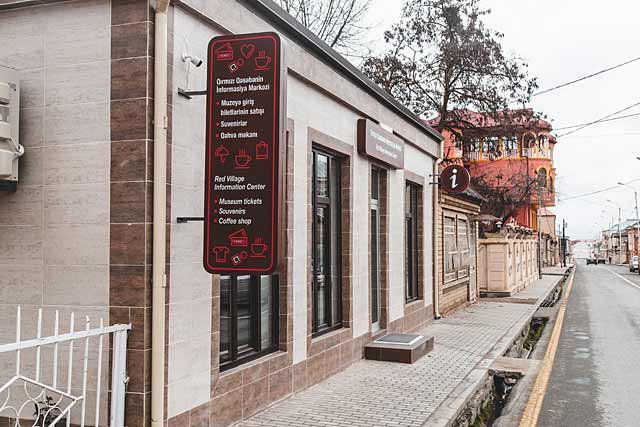
The Red Village got its name from all the red roofs of the buildings. While Jews had lived in the area since the 13th century, this town was established in 1742. This was after the local ruler allowed the Jews to live on the other side of the river. The Jews of Red Village identify themselves as Mountain Jews, with their practices distinct from the Jews elsewhere.
The intricate traditions of Red Village
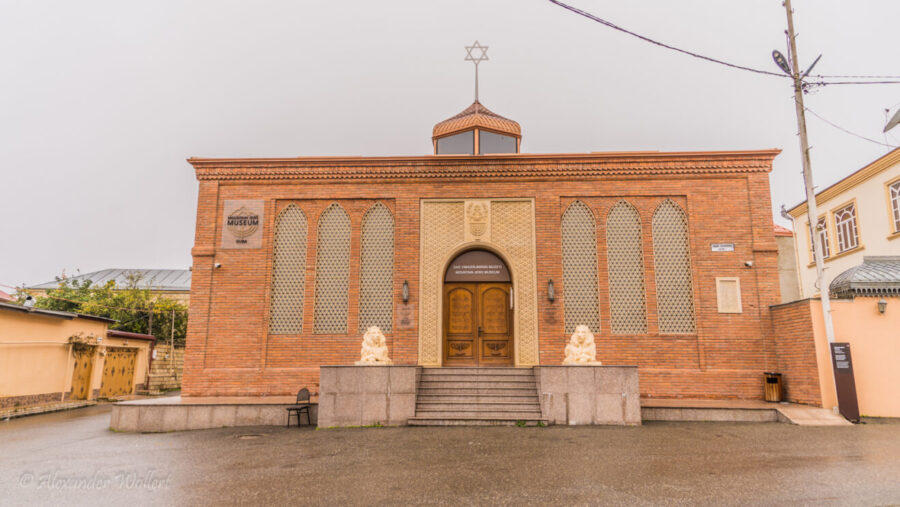
The Red Village still houses some ancient synagogues. Though most of those are not out of use due to dwindling population. I was amazed to learn how some Muslim traditions have been integrated in the traditional practices of Jewish families here. If you are here, you should take a look of the Jewellery shops in the village. These have intricated historical collections, inspired by Mountain Jewish heritage. The beautiful gold and silver designs, often studded with stones and glimmering gemstones, whisper to one another hundreds of years of craftsmanship.
The sad notes of the Genocidal Museum
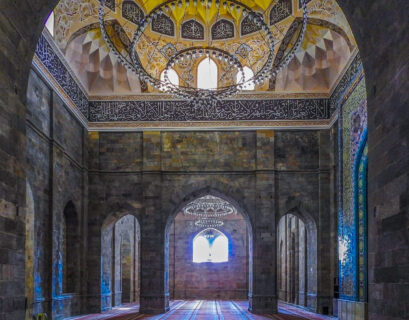
The main town of Quba has two noteworthy attractions. A quick visit worthy Juma Mosque, and one for a deeper reflection and a lesson in Azerbaijani history – the Genocidal Museum. In 2007a mass grave of over 500 individuals, many elderly people and children, was uncovered, when a soccer stadium was being built in the town. This was a mass grave of victims of violence by Armenian gangs in 1918. The conflict between Armenia and Azerbaijan is old and complex. This museum presents an Azerbaijani view of the conflict. And on the site of this mass grave, Azerbaijan Government built a museum to tell the story behind centuries old conflict between the two countries.
To the quiet Juma Mosque
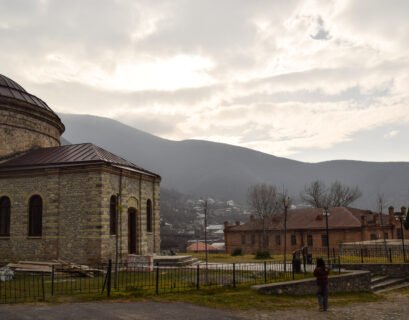
And while in the city, take time to visit Red Juma Mosque. This is one of the oldest in Azerbaijan and the carpet weaving factory. The factory produces handmade carpets made by Azeri women hunched over weaving apparatus. Apparently, hand weaving half square meter of a wool carpet takes one woman one month. Both places are located near the center square of the town.
Breathe in freshness of Quba
I had kept an extra day for Laza and Khinaliq, and so I preferred to spend the evening exploring Quba more. Quba is the fruit basket of Azerbaijan, and the local market bears testimony to that. I was also excited about the baklava of Quba. It seemed that every block had multiple homemade baklava shops and several types to choose from. Grabbing a box of baklava is a sweet way to end a long day. There are also some nice local delicacies that one can try. Do try Qutab, a thin savoury pancake filled with herbs, cheese, pumpkin, or minced meat. Also to try are Azeri dumplings, Khinkal served with garlic sauce. And dolma, small rolls that are slow-cooked to absorb spices. The best comes when you eat this, as flavors from the spices bursts in your mouth, as you eat.
Hits: 222
Tags: Azerbaijan cities, Azerbaijan tourism, Candy Cane Mountains Azerbaijan, Jerusalem o the Caucasus, Mountain Jews Azerbaijan, Places to see in Azerbaijan, Quba, Red Village Azerbaijan, Things to do in Quba Azerbaijan, Tourism in Middle East Last modified: May 31, 2026